The Forgotten Sense: Why Proprioception Protects You More Than Muscles
In this article
For years, physical health has largely been defined by strength, how much you can lift, how fast you can run, and how long you can endure. Strength is visible, measurable, and often associated with control and performance.
However, physical resilience is not determined by strength alone. Beneath it lies a less visible but equally critical system that governs how safely and efficiently the body moves: proprioception.
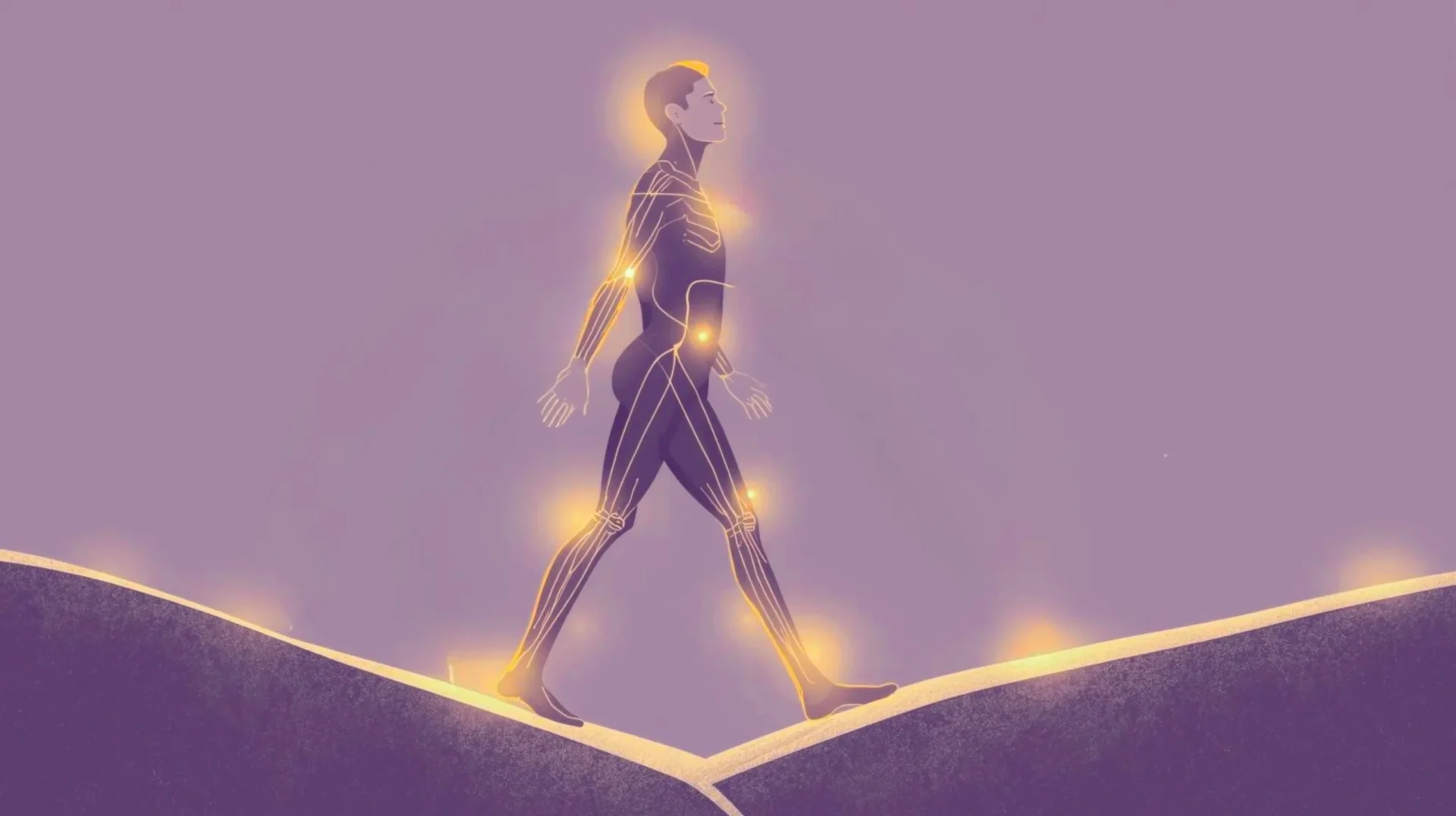
Proprioception refers to the body’s ability to sense its position, movement, and alignment in space. It plays a key role in coordinating movement, maintaining balance, and preventing injury, often without conscious awareness. [1]
What Is Proprioception?
Proprioception is a sensory function driven by receptors located in muscles, joints, and connective tissue. These receptors continuously send information to the brain about joint position, muscle tension, and movement patterns. [2]
This allows the body to:
- Adjust posture automatically
- Maintain balance during movement
- Coordinate complex actions
- Respond quickly to external changes
Without proprioception, even simple movements would require constant visual attention and conscious control.
The Relationship Between Proprioception and Strength
Muscle strength enables the body to generate force. However, without proper coordination and alignment, that force may be applied inefficiently.
When proprioception is well-developed, the body can:
- Distribute load evenly across joints and tissues
- Maintain proper alignment during movement
- Adjust quickly to changes in environment
When proprioception is reduced, movement becomes less precise. This can lead to:
- Poor joint positioning
- Delayed muscular response
- Increased strain on specific tissues
As a result, injury risk increases even in individuals with adequate or high levels of strength. [3]
Proprioception and Injury Prevention
There is a strong connection between proprioception and injury prevention. Before most injuries occur, the body experiences subtle disruptions in movement.
These may include:
- Minor loss of balance
- Slight misalignment of joints
- Delayed response to changes in load
With good proprioceptive awareness, these disruptions are detected early, allowing the body to make immediate corrections.
When proprioception is impaired, these signals may go unnoticed. Over time, repeated stress accumulates in tissues, leading to discomfort, overuse injuries, or acute strain. [3]
In this way, proprioception functions as a protective mechanism.
Impact of Modern Lifestyle
Modern environments often limit the stimuli required to maintain proprioception.
Common factors include:
- Prolonged sitting
- Repetitive movement patterns
- Flat and predictable surfaces
- Highly supportive footwear
While these conditions improve convenience and efficiency, they reduce the need for the body to adapt to changing conditions.
As a result, the proprioceptive system becomes less responsive over time due to reduced use. [4]
Balance as an Indicator of Proprioception
Balance is closely linked to proprioception. It reflects the body’s ability to sense position and make continuous adjustments. [1]
When proprioception is effective:
- Balance is stable and automatic
- Movements are smooth and coordinated
When proprioception is reduced:
- Balance becomes less stable
- Movements require more conscious effort
- The risk of falls or missteps increases
Improving balance is therefore an effective way to enhance proprioceptive function.
How to Improve Proprioception
Consistent exposure to varied movement improves proprioception. [5]
- Single-leg balance exercises
- Walking on uneven or natural surfaces
- Practicing controlled, slow movements
- Incorporating direction changes and dynamic activities
- Training barefoot where appropriate and safe
These approaches increase sensory input and challenge the body to adapt, strengthening the connection between the nervous system and movement.
The Role of Proprioception in Long-Term Resilience
Long-term physical resilience depends on the body’s ability to adapt to stress and maintain efficient movement patterns.
While strength generates force, proprioception helps the body apply that force safely and effectively.
A well-functioning proprioceptive system:
- Reduces injury risk
- Improves movement efficiency
- Enhances coordination and stability
- Supports overall physical performance
Conclusion
Strength is an important component of physical health, but it does not function independently. Proprioception plays a critical role in guiding movement, maintaining balance, and preventing injury.
Modern lifestyles limit movement variability, which often leads to underdeveloped proprioception. Reintroducing diverse and challenging movement patterns can help restore this essential function.
Ultimately, strength alone does not define resilience. The body’s ability to sense, adapt, and respond to movement demands does.
Proprioception is central to that process.
Co- authored by: Shayamal Vallabhjee
Chief Science Officer: betterhood
Shayamal is a Human Performance Designer who works at the intersection of psychology, physiology, and human systems design, for the last 25 years he is helping high-performing leaders, teams, and athletes thrive in environments of stress, complexity, and change. His work spans across elite sports, corporate leadership, and chronic health and is grounded in the belief that true performance isn’t about pushing harder, but designing better.
References
- National Institutes of Health. (2021). Proprioception and balance control. https://www.ncbi.nlm.nih.gov
- StatPearls Publishing. (2023). Proprioception. https://www.ncbi.nlm.nih.gov/books/NBK537325/
- American Academy of Orthopaedic Surgeons. (2022). Balance and injury prevention. https://orthoinfo.aaos.org
- Harvard Health Publishing. (2022). Why balance declines with age and inactivity. https://www.health.harvard.edu
- Cleveland Clinic. (2023). Proprioception exercises and benefits. https://my.clevelandclinic.org


