Posture Correction Yoga: From Slouching To Strong Alignment
In this article
- Understanding Posture and Alignment
- Why Slouching Happens
- How Posture Correction Yoga Helps
- Key Posture Correction Yoga Practices
- Benefits of Posture Correction Yoga
- Integrating Yoga into Daily Life
- Supporting Your Practice with betterhood
- Common Mistakes to Avoid
- Creating Long-Term Change
- Conclusion
- FAQs
- References
Contrary to what they might seem, some of the popular fitness trends known as posture correction yoga are way more than that. You are training in a very practical but effective and biological way to find movement that closely resembles the design of your body and reduce unnecessary mechanical lives and vigours on tissues under modern life. Bad postures are contributed by constantly sitting. That makes way for slouching, inflexibility and pain which your body now just accepts as part of how it works.
This habit becomes so ingrained that the body learns to live in a less than ideal position. Certain muscles that should fire basically become inhibited and some just tighten from overusing them. Let’s not even talk about the limitations on mobility and range of motion that can impact balance. This may appear like a regenerative position but it is generating stress off the back all through your spine and related constructions.
The yoga part of posture correction guides gentle, simple undirected action to balance. Rather than forcing your spine into a rigid position, it trains your muscles to support the body in its naturally aligned way. It is a journey with each movement practiced with mindfulness, reeducating you of how your body wants to move.
With practice, your posture can transform from slumped and weary to proud, confident and idealistic. Over time, you will start to literally wear those postural changes into your daily life so that an optimal posture becomes second nature as opposed to something that needs constant reminders.
Understanding Posture and Alignment
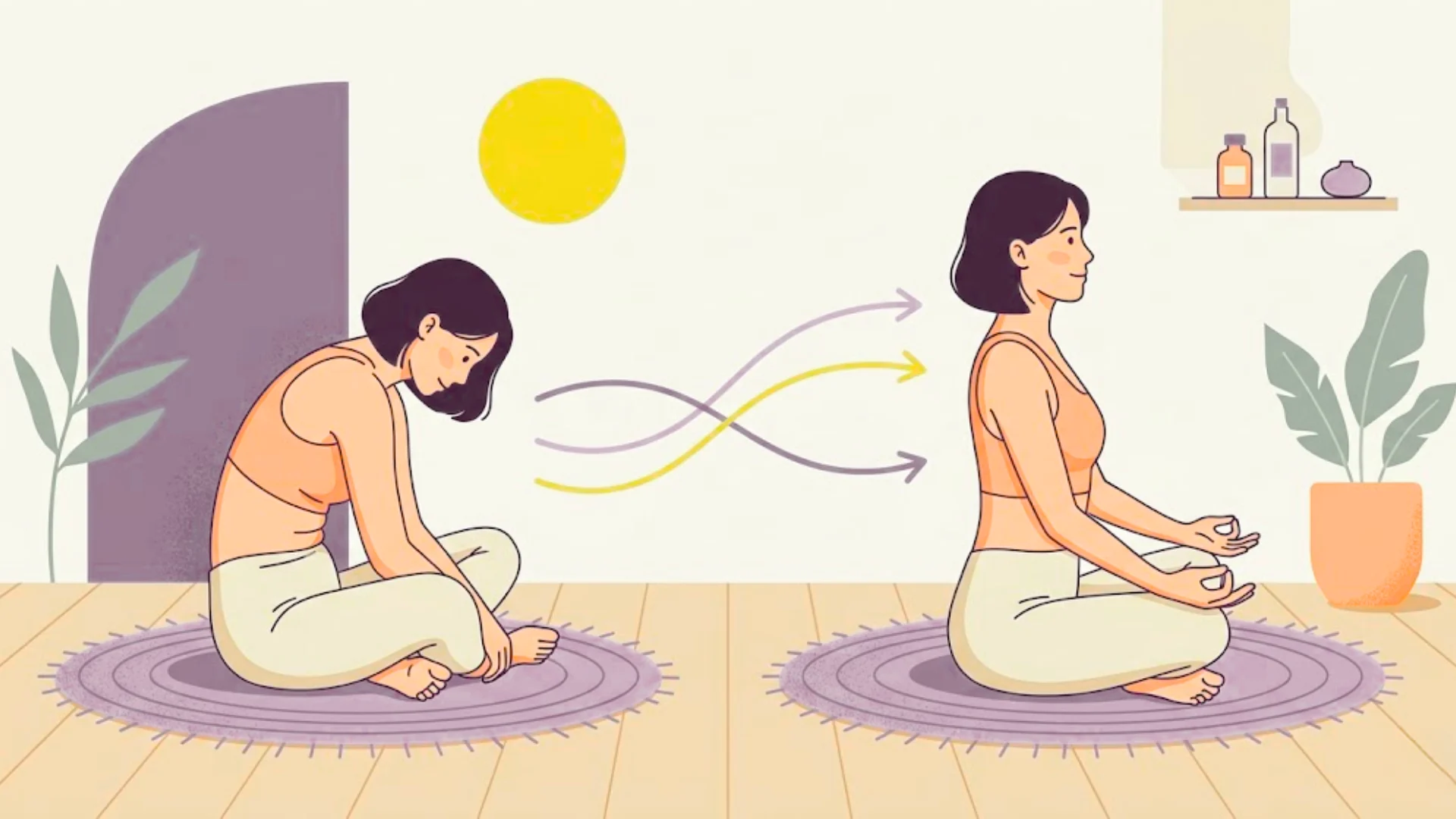
Posture is not only how you hold your body when you are sitting or standing. It shows how your body self-organizes in response to events that occur throughout the day. That means your joints, muscles and spine are all aligned to support the right movement.
When your posture is aligned:
- The traditional posture of a chair enables your spine to continue its natural curvature
- Your muscles do not compensate, they only work efficiently
- You feel your body more in balance less stressed
Alas prevailing posture promotes imbalances. Few muscles become short (tight), few weaken. So, as a result of this imbalance the body comes out of that balance (alignment) so then it becomes difficult to stand upright.
Why Slouching Happens
What you might not know is that the majority of slouching comes from habit rather than a conscious decision. The cycle is fed by long hours spent sedentary, mobile devices and work without the right support.
Common Causes of Slouching
1.Prolonged Sitting
The body bends to the front due to a long period of sitting, which also engages fewer muscles. It progressively reduces activation in all the major stabilizers and eventually makes it more difficult for the spine to remain supported through its own mechanisms entirely.
2.Weak Core Muscles
When our core muscles are not strong enough, we cannot hold ourselves up and it means that we have slouched shoulders. If the core has given up stability in that function for the body, your lower back muscles and adjacent ones must bear a greater load leading to more fatigue and pain.
3.Tight Chest and Hip Muscles
And tightness in the front of the body will pull the shoulders forward and often, cause misalignment by tipping the pelvis. Any imbalance that takes the body out of a neutral equation, impedes both movement and postural control.
4.Lack of Body Awareness
Only when pain arises do most of us begin to think about our posture. Without constant awareness, bad habits become automatic and with time it becomes harder to take notice of misalignments throughout your day and rectify them.
How Posture Correction Yoga Helps
Yoga exposes a concrete way to work on posture, both strength and flexibility. Its goal is to rebalance, tightening weak muscles and loosening tight ones.
Restoring Natural Alignment
Yoga allows the spine to reclaim its natural curves. The body learns the sensation of alignment in an informed sequence so that we can carry it into our everyday lives!
Improving Muscle Balance
Certain yoga postures stimulate muscles that often go unused especially in the core and upper back. At the same time, they are stretching tight areas like the chest and hips.
Enhancing Body Awareness
Increased Awareness One of the major advantages of posture correction yoga. You sit, stand and walk on the alert when you practice.
Key Posture Correction Yoga Practices
If you keep doing simple yoga movements, you can never go wrong with your posture and the rest of your shoulder blades.
1.Mountain Pose (Tadasana)
The foundation pose and structure and alignment
- Place your feet at shoulder-width and step to the side
- Distribute your weight evenly
- Let steam roll off those shoulders and swing chest-wide
This seems simple enough, but you are learning to recognize the feeling of alignment.
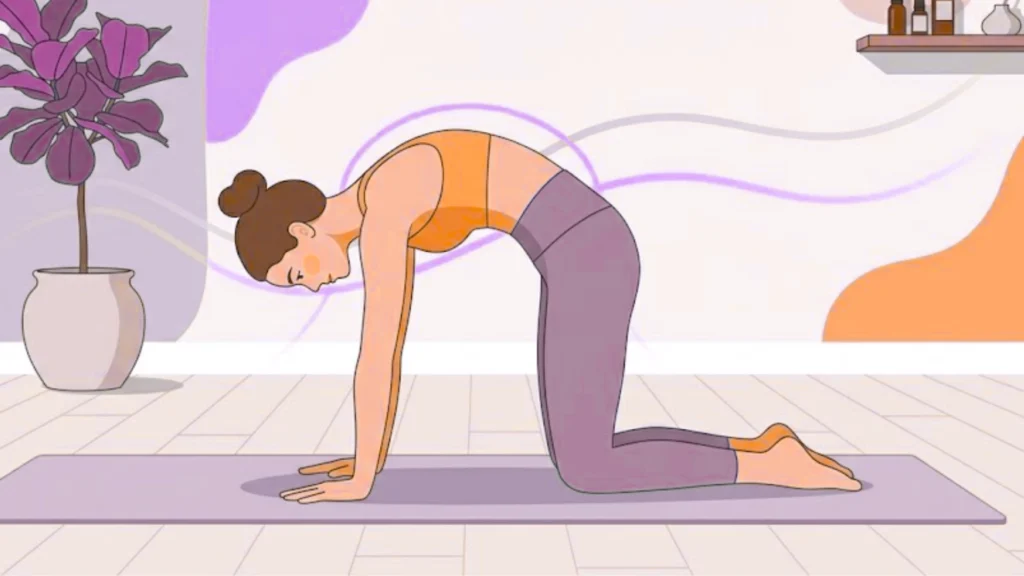
2.Cat-Cow Stretch
This gives you better spinal mobility and an increased range of motion without stiffness.
- Alternate between an arched back and a rounded back
- Breathe with the movement
- Move slowly and with control
3.Cobra Pose (Bhujangasana)
In this pose it is opening the chest and it is strengthening the back.
- Keep drawing your shoulders down and very slowly lifting your chest up.
- Avoid overextending your lower back
- Main target is upper back muscles
4.Child’s Pose
Posture which heals you and settles your system.
- Stretch your arms forward
- Relax your spine and hips
- Breathe deeply to release stress
Benefits of Posture Correction Yoga
Through regular practice of posture correction yoga, mindblowing changes can happen to physical comfort and well-being.
Reduced Pain and Discomfort
Alignment through yoga is effective in reducing excess tension on the spine and areas surrounding it. This relieves tension and keeps minor irritations from becoming chronic problems.
Better Flexibility and Mobility
Stretching also makes your body more flexible; so, helps you get rid of muscle stiffness from a long sitting posture. Improved flexibility means your joints move more freely over time.
Increased Strength and Stability
When you have trained those important muscles, your body leans on them so that we only maintain the correct posture with less effort. A more stable foundation allows us to stay together in motion and stillness.
Improved Breathing
Easier to have full lung expansion with chest open and spine in line. Allows for deeper breathing, allowing that major effectiveness of respiration and it can boost your power as well as concentration.
Integrating Yoga into Daily Life
In fact, something as simple as yoga that corrects your posture doesn’t have to take hours and hours. Little practices you repeat where the habit is born by repetition leading to lasting change where small changes yield big results.
Start with Short Sessions
Even 10–15 a day, you could start small. Better to do 1 hour of mindful moves than 3 hours of loosely connected sessions.
Combine with Daily Habits
Analyze the way you sit, stand and walk. Incorporating what you practice in yoga into your day makes for some active repetition of bringing healthy alignment breathing.
Stay Consistent
Improvement comes from repetition. And the more you do it, your body will start to align and good posture will feel less forced.
Supporting Your Practice with betterhood
Yoga for posture correction retrains our body, but with some external aid this process will be smoother and successful. And betterhood products are just to complement your action, so you can remain in sync busily traveling through the active hours of everyday life.
Encouraging Proper Alignment
betterhood product eases and preserves your spine from the natural hunch for seating or standing long hours. This eliminates the perennial requirement for correction, consequently allowing your muscles to release into good alignment.
Reducing Daily Strain
They increase support to the lumbar and shoulders to help take some tension you put on your body away when performing tasks.
Key Advantages
- Help with preserving the lifestyle improvements accomplished through yoga
- Comforting in an extended sitting
- Offers a more neutral and balanced shoulder structure
Making Posture a Habit
When we combine these approaches, a holistic approach to posture correction yoga can be implemented. Yoga teaches us to be strong and mindful while betterhood products help us stay good throughout the day.
Common Mistakes to Avoid
However, you could be making a few errors in posture correction Yoga that might obstruct your journey. Being familiar with these will keep you sufficiently equipped in order to sidestep them and refuse that next hiccup for your process.
Forcing Movements
Excessive exertion the body can suffer damage or injuries. Yoga for posture correction is focused on control rather than intensity. Focus on gentle, sustainable movements that your body can receive, not forcing postures.
Inconsistency
Doing it all once in a while, will not make you transform. Because your body learns by repeating movement, mixed types of practice are truly making it harder to build strength and awareness. Doing short sessions daily is much more effective than doing long sessions infrequently.
Ignoring Daily Habits
We can have the strongest yoga practice in the world and yet if it is not supported throughout our day by good posture habits then it will not amount to much. Slouching over while you are sitting or standing can erase most of the benefits that your practice brings to your body. You practice yoga with the intent of taking those lessons into your daily life.
Creating Long-Term Change
This is not a magic pill that will fix yoga for posture correction. It is a journey, not a destination; it involves reconditioning your body and mind to form new behavioral patterns that allow for alignment over the long haul.
Build Awareness
Focus on how your body responds in different positions. Recognizing your posture more times than less, is being honest about making regular check-ins for discrepancies so that you make shifts before fatigue arises.
Stay Patient
You may go slow, but small changes have a huge impact. It may feel as if nothing has changed whilst working on improvements to the estate that might take time but I guarantee you things will change for real when you remain consistent.
Focus on Sustainability
Pick routines, habits you can keep doing for years. A middle ground or a balanced stance is far accounting compared to an aggressive one and then be unsustainable in the longer run.
Conclusion
Posture yoga is the best bridge from slouching and weak alignment towards a strong correction as it is useful and effective. This also means that by developing balance, strength and an awareness of movement at a primal level, it balances the body and nullifies tension brought on through long-held poor postural mechanics.
With supportive tools like betterhood products, this is a win-win for the long haul. They provide a structure in which your spine must rest, they help the posture of your body and overall well-being.
Improving posture becomes something that you can keep and practice daily, not if you have at least a recommendation.
FAQs
Posture correction yoga is a form of yoga focused on improving body alignment by strengthening weak muscles and stretching tight ones. It helps restore balance in the body and supports a healthier spine.
You can practice daily for best results. Even 10–15 minutes a day is effective when done consistently.
Yes, regular practice helps retrain your muscles and improve awareness, which gradually corrects slouching and promotes better alignment.
Yes, it is beginner-friendly. Most exercises are gentle and can be modified based on your comfort and flexibility levels.
Some people notice improvements in a few weeks, but long-term changes typically require consistent practice over several months.
No special equipment is required. However, a yoga mat and supportive tools can improve comfort and stability during practice.
Yes, by improving alignment and reducing muscle strain, it can help relieve common neck and back discomfort over time.
References
[1] Iyengar, B. K. S. (2005) Light on Yoga. Available at: https://books.google.com/books?id=LightOnYogaIyengarCompleteGuide
[2] McGill, S. M. (2007) Low Back Disorders: Evidence-Based Prevention and Rehabilitation. Available at: https://www.humankinetics.com/products/low-back-disorders-second-edition
[3] National Institutes of Health (2020) Yoga for Health: What the Science Says. Available at: https://www.nccih.nih.gov/health/yoga-what-you-need-to-know
[4] Harvard Health Publishing (2022) Yoga for Better Posture. Available at: https://www.health.harvard.edu/staying-healthy/yoga-for-better-posture
[5] World Health Organization (2021) Musculoskeletal Conditions. Available at: https://www.who.int/news-room/fact-sheets/detail/musculoskeletal-conditions
[6] American Council on Exercise (2023) How Yoga Improves Posture and Alignment. Available at: https://www.acefitness.org/resources/everyone/blog/how-yoga-improves-posture
[7] National Library of Medicine (2019) Effects of Yoga on Musculoskeletal Pain and Posture. Available at: https://www.ncbi.nlm.nih.gov/pmc/articles/yoga-posture-musculoskeletal-study


