How Poor Posture Causes Knee Pain and How to Fix It
In this article
- Posture and Knee Health: An Overlooked Connection
- Common Postural Flaws That Strain the Knees
- Anterior Pelvic Tilt and Excessive Lumbar Lordosis
- Muscular Imbalances Stemming from Postural Issues
- The Role of Everyday Activities in Posture-Related Knee Problems
- Identifying Postural Patterns That Cause Knee Pain
- Targeted Exercise Strategies to Correct Posture and Protect Knees
- Supportive Interventions: Braces, Orthotics, and Ergonomics
- Nutritional Support and Lifestyle Changes for Joint Health
- When to Seek Professional Help: Signs You Shouldn’t Ignore?
- Conclusion
- References
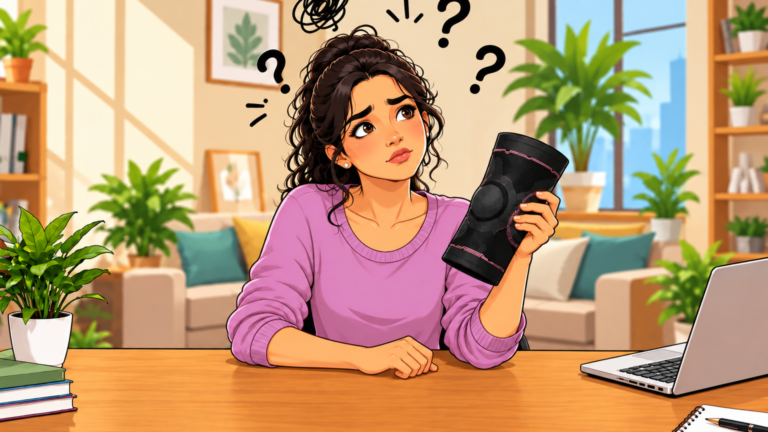
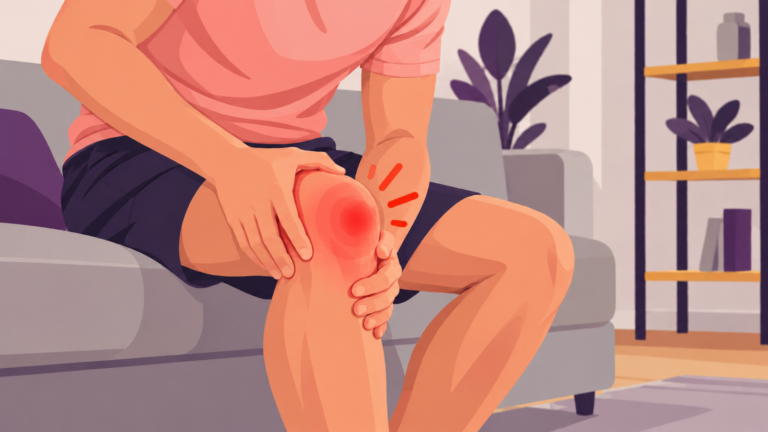
Have you ever felt that your knees were kind of grumpy after a long Netflix or desk day? Bad posture does not only cause us to appear a little stooped; it also is the cause of several knee pains in an unobtrusive way. No matter whether they sit at a desk or go jogging on weekends, the posture of all people influences the well-being of their joints. This article will inform you regarding the influence of your posture on knee pain and the way to correct it. It is a combination of scientific facts, with a little bit of fun, and practical knowledge that is applicable in reality.
Posture and Knee Health: An Overlooked Connection
Defining Posture and Its Significance in Musculoskeletal Health
Standing straight is not about posture. It is the way your bones, muscles, and joints fit together when aimed at sitting, standing and moving. When you stand on your feet, your muscles will cooperate with each other more effectively due to your well-distributed weight all over the body. Bad posture, however, disrupts this balance, as some muscles become more active than others, and this puts strain on joints, causing your knees to hurt.
How Spinal and Pelvic Alignment Affect Knee Mechanics
The spine and pelvis act as the foundation for the entire lower body. If your pelvis tips forward (hello, “duck butt”!), your thigh bones rotate, pulling the knees in odd directions. A swayback or a rounded spine can throw off hip alignment, translating to abnormal forces and torque through the knees with every swing and step you take.
The Cascade Effect: Poor Posture’s Impact Beyond the Knees
Poor alignment does not only cause knee pain; it may begin in the feet, hips, or back. The knees must overwork to compensate for any haste in the biomechanical chain. This might in the long run cause knee pain and swelling and damage to the joint and even restricted movements.
Common Postural Flaws That Strain the Knees
Anterior Pelvic Tilt and Excessive Lumbar Lordosis
An excessive movement of the pelvis towards the forward direction that pulls the legs and worsens the curve of the lower back. This makes the body gain weight and radiate on to the knees causing stress to the joint and the possibility of pain, particularly during walking or long hours of sitting.
Knock-Knees (Valgus) and Bowlegs (Varus) Linked to Posture
Poor posture over a long period of time (through childhood or even adulthood) is a common cause of knees that bend in (knock-knees) or out (bowlegs). These malalignments elevate the probability of osteoarthritis and stress injuries to the ligaments by altering the manner in which the shock is absorbed and the cartilage of the joints is worn out.
Forward Head Posture Influencing Overall Body Balance
You may wonder how your knees and head are positioned. As a matter of fact, everything is interrelated. When you lean forward, the center of gravity moves forward. That is why it is harder to hold you on your knees when you are standing, walking or climbing the stairs.
Muscular Imbalances Stemming from Postural Issues
Tight Hip Flexors and Their Effect on Knee Loading
Prolonged sitting or bad posture causes hip flexors (muscles at the front of your hips) to shorten. Tight hip flexors rotate the pelvis forward, increase lumbar lordosis, and make the quadriceps overactive, ultimately loading the knee joint excessively [1].
Weak Gluteal and Core Muscles Contributing to Knee Pain
The glutes, core, and lower back stabilize the entire trunk and pelvis. Weakness here means your knees absorb more impact, especially during running, jumping, or rapid changes in direction, leading to pain and swelling.
The Chain Reaction: Compensation Patterns Increasing Knee Stress
Your body is a master compensator. If your hips are tight, or your glutes are lazy, your knees step in (pun intended) to compensate. Over time, this causes maltracking, extra lateral movement, and pain, sparking the cycle of knee pain reasons that can be surprisingly tough to break.
The Role of Everyday Activities in Posture-Related Knee Problems
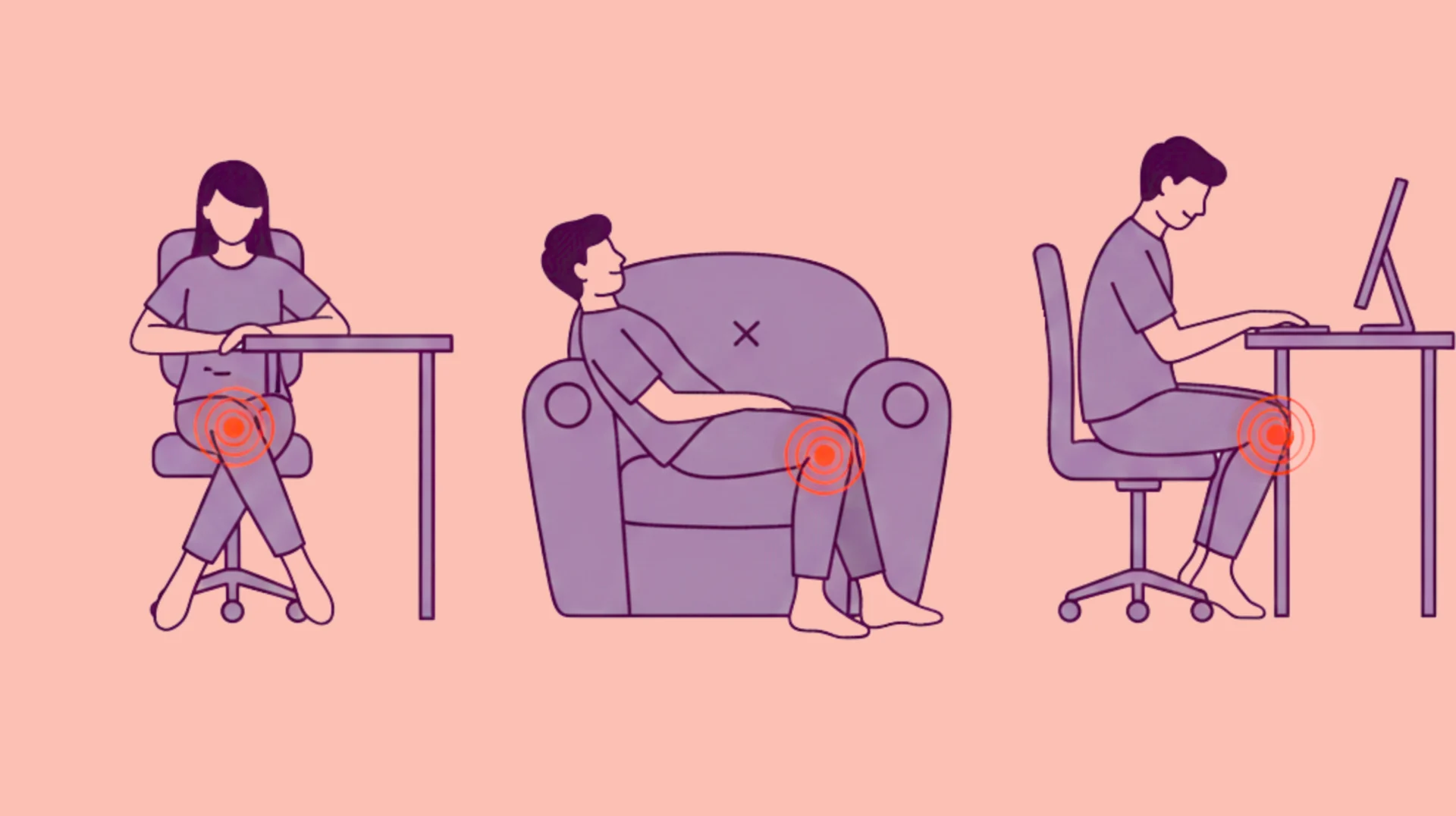
Sitting Postures That Aggravate Knee Joint Load
- Crossing legs for hours.
- Slouching in soft chairs.
- Sitting with knees hyperflexed under the desk.
All these postures tense the back and hips, forcing compensatory stress upon the knees.
Impact of Standing Habits and Weight Distribution
Standing with most of your weight on one leg, locked knees, or “resting” by jutting a hip out (Instagram pose alert!) overtime overload specific parts of your knees.
How Recreational Activities and Work Postures Influence Knees
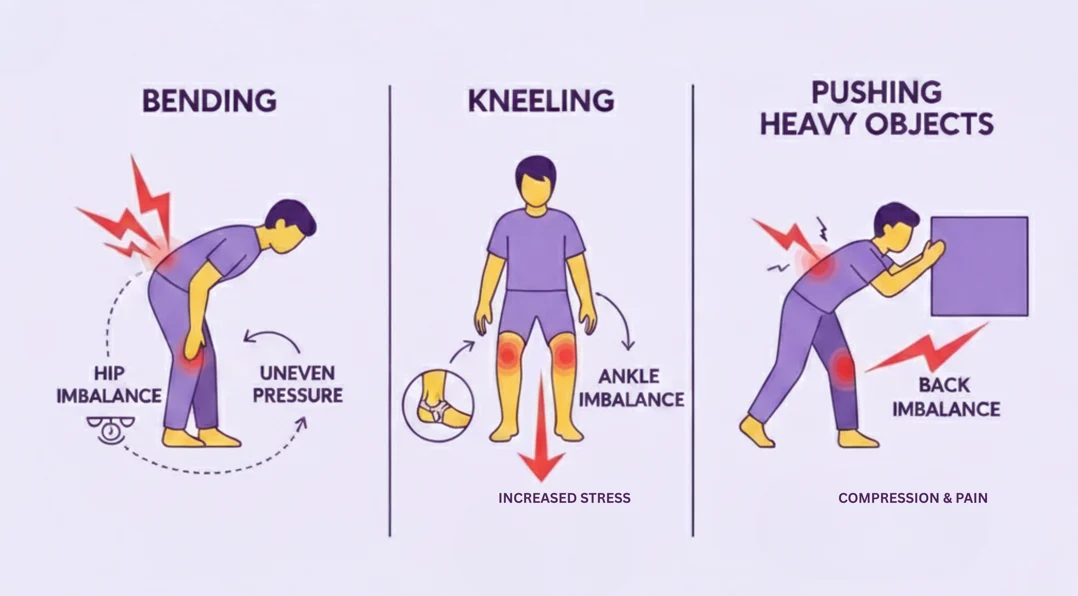
Bending, kneeling or pushing heavy objects can cause imbalances in hips, back or ankles, which can pass on to your knees if not given proper attention [2].
Identifying Postural Patterns That Cause Knee Pain
Self-Assessment Techniques for Posture Evaluation
- Check yourself in the mirror by standing barefoot. Test whether or not your kneecaps are pointing straight or inward/outward.
- Take a wall posture by resting the butt, shoulders, head, and feet on the wall. Are your back arches or knees too low?
- Observe how your shoes are; they may wear one side more than the other and it may be a way of showing how you generally handle things.
Clinical Assessments and Gait Analysis
Your gait, mobility and alignment can be examined by physiotherapists and rehabilitation specialists to determine whether your posture is causing your knee pain.
Using Technology: Apps and Devices for Posture and Knee Health
Smartphone apps and wearable sensors give real-time feedback on your alignment, helping you self-correct and build awareness of posture-linked knee pain causes [3].
Targeted Exercise Strategies to Correct Posture and Protect Knees
Stretching Tight Muscle Groups to Relieve Joint Pressure
- Hip flexor stretches (lunges or kneeling hip stretches).
- Hamstring stretches for the back of the thigh.
- Calf and IT band stretches.
Strengthening Exercises to Improve Alignment and Support
- Glute bridges and clamshells for hip strength.
- Core exercises (planks, dead bugs) for postural stability.
- Wall sits and controls squats to retrain knee alignment.
Balance and Proprioceptive Training to Enhance Stability
Single-leg balance drills, step-downs, and using balance pillows improve coordination, keeping your knees in line even if your mind wanders to what’s for dinner [4].
Supportive Interventions: Braces, Orthotics, and Ergonomics
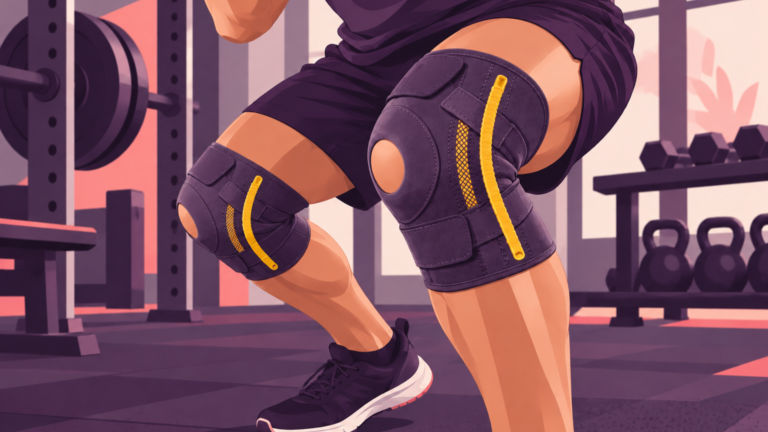
Knee Braces as Adjuncts in Correcting Biomechanical Stress
Knee braces aren’t just for injuries; they can help retrain alignment and manage pain during rehab. The best kneecap for pain relief is selected based on your knee’s specific needs, mobility, and comfort.
Custom Orthotics to Realign Gait and Offload Knees
Custom shoe inserts can correct inappropriate arch support and redistribute force up the chain, helping your knees find their happy place.
Ergonomic Modifications for Workplace and Home
- Adjustable chairs and desks to keep hips/knees at right angles.
- Footrests to reduce knee overextension when sitting.
Even small ergonomic tweaks can make a big difference over time.
Nutritional Support and Lifestyle Changes for Joint Health
Anti-Inflammatory Diet Principles Supporting Knee Recovery
Eating more omega-3s (salmon, walnuts), berries, leafy greens, and less processed food gives your joints a better fighting chance against swelling and chronic pain [5].
Weight Management’s Role in Posture Improvement
Every extra kilogram adds about 4 kg worth of pressure on your knees with each step. Keeping a healthy weight is key, especially if poor posture already loads the joint.
Integrating Mindfulness and Movement Awareness for Long-Term Benefit
Mindful movement, like yoga, pilates, or simply checking in with your posture during daily activities, correlates with fewer knee complaints and longer joint life [6].
When to Seek Professional Help: Signs You Shouldn’t Ignore?
Persistent Knee Pain with Postural Deficits
If correcting posture and self-care haven’t eased your symptoms after a few weeks, an in-person assessment is the next best step.
Functional Impairments and Reduced Mobility
Difficulty standing, walking, or performing simple tasks may signal structural issues; don’t wait for it to “settle” on its own.
Collaborating with Healthcare Providers for Multidisciplinary Care
Physiotherapists, orthopedic doctors, and even pain specialists can create a tailored plan combining exercises, home remedies for knee pain, knee pain medicine, and lifestyle advice for lasting change.
Conclusion
Stooping all the time is not good for your joints and contemporary life. Knee pain problems should be better identified and addressed as early as possible to prevent the possibility of worsening with time. It is not just that your knees help you go round; they do so with a silent smile. This is aimed at identifying exercises that experience pleasure and are functional rather than ideal.
Your knees would be finally saying after you stood all day, boss, thank you.
Moreover, posture plays a critical role in maintaining your overall health. Check how:
Frequently Asked Questions:
1. Can poor posture alone cause knee pain?
Yes, chronic poor posture alters alignment and stress distribution, eventually producing knee pain even without direct injury or arthritis.
2. What are the best exercises to fix posture-related knee pain?
Focus on glute bridges, hip flexor and hamstring stretches, glute medius strengthening, and core stability drills alongside posture-correcting moves.
3. How long does it take to see improvement after correcting posture?
Most people notice relief and mobility gains within a few weeks of consistent exercise, ergonomic tweaks, and mindful posture checks.
4. Are knee braces effective in managing posture-related pain?
A well-fitting knee brace relieves symptoms and supports better alignment but should be integrated with an active rehab program, not used as a crutch.
5. When should I consult a specialist for knee pain linked to posture?
Seek professional advice if pain persists over several weeks, limits mobility, or is associated with swelling, locking, or unsteady movement.
References
- Brolinson, P. G., Rogers, M., & Edison, J. (2016). Functional and kinetic chain evaluation of the hip and pelvis. The Hip and Pelvis in Sports Medicine and Primary Care, 37-64. https://doi.org/10.1007/978-3-319-42788-1_3
- Porter, K. (2013). Natural Posture for Pain-Free Living: The Practice of Mindful Alignment. Simon and Schuster. https://books.google.com/books?hl=en&lr=&id=Wl8oDwAAQBAJ&oi=fnd&pg=PT12&dq
- Figueira, V., Silva, S., Costa, I., Campos, B., Salgado, J., Pinho, L., … & Pinho, F. (2024). Wearables for monitoring and postural feedback in the work context: a scoping review. Sensors, 24(4), 1341. https://doi.org/10.3390/s24041341
- Olson, A. Common Injuries and Therapy Management for Runners. CE for New York Physical Therapy Professionals, 35. https://s3.amazonaws.com/EliteCME_WebSite_2013/f/pdf/PTNY04TRI17.pdf
- Challem, J. (2010). The inflammation syndrome: your nutrition plan for great health, weight loss, and pain-free living. Turner Publishing Company. https://books.google.com/books?hl=en&lr=&id=rH3uEAAAQBAJ&oi=fnd&pg=PT8&dq
- Lim, E. J., & Hyun, E. J. (2021). The impacts of pilates and yoga on health-promoting behaviors and subjective health status. International journal of environmental research and public health, 18(7), 3802. https://doi.org/10.3390/ijerph18073802