When the Body Loses Its Vocabulary for Movement
In this article
For most of human history, movement was not exercise. It was language.
We squatted to rest. Reached to gather. Rotated to look, climb, throw, carry, and connect. The body spoke constantly through motion to the nervous system about capability, adaptability, and safety.
Modern life has quietly reduced that vocabulary.
We sit, scroll and repeat narrow patterns of motion. And slowly, the body forgets words it once used fluently.
When movement shrinks, safety perception shrinks with it. [1]
Movement Is Information
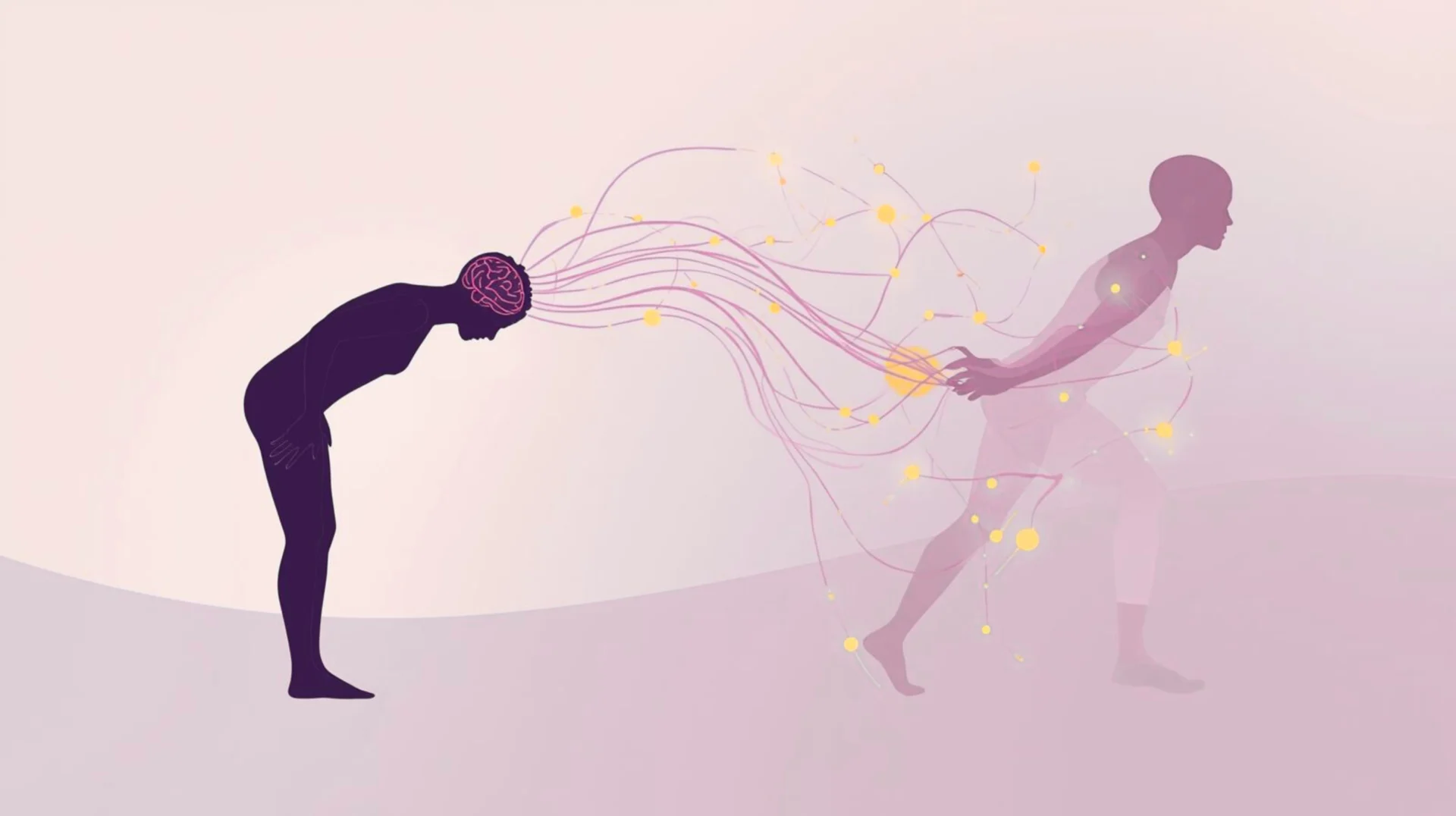
Movement is not just mechanical output. It is sensory input.
Every time a joint moves through space, receptors in muscles, fascia, and connective tissue send information to the brain:
- Where the body is
- How stable it feels
- Whether it can adapt
- Whether it is safe to explore
This is proprioception, the nervous system’s map of self. [2]
A rich movement vocabulary builds a detailed map. A limited vocabulary creates blank spaces.
And blank spaces rarely feel safe.
Safety Is Built Through Exposure
The nervous system does not assume capability. It learns it.
When you rotate, balance, crawl, bend, and shift load in varied ways, the brain gathers evidence:
“I can do this and can recover.”
“I am supported.”
Remove that exposure, and uncertainty grows.
This doesn’t show up dramatically. It shows up subtly.
Hesitation before movement. Unexplained stiffness. Heightened sensitivity to discomfort. Fatigue from ordinary physical demand.
The body hasn’t become fragile. It has become unfamiliar with itself. [3]
Modern Stillness Narrows the Dictionary
Most daily movement now happens in small ranges:
- Typing posture
- Screen-focused neck position
- Limited hip variation
- Minimal spinal rotation
- Predictable walking patterns
The nervous system receives fewer novel inputs.
Over time, unused ranges feel foreign. Foreign ranges feel risky. Risk triggers protective tension.
Mobility declines not because tissues fail but because the nervous system stops authorizing exploration. [4]
Pain Often Follows Lost Language
When the body loses movement options, it loses problem-solving capacity.
Load concentrates in predictable areas. Compensation increases. Sensitivity rises.
Pain frequently emerges in systems that are not damaged, only under-varied. [5]
The nervous system responds to uncertainty by increasing protection.
Protection feels like:
- Tightness
- Guarding
- Reduced fluidity
- Movement avoidance
Not because something broke but because something was forgotten.
The Emotional Dimension of Movement
Movement vocabulary also shapes emotional state.
Varied motion:
- Expands breath patterns
- Stimulates vestibular systems
- Regulates autonomic balance
- Enhances environmental engagement
- Restricted motion narrows experience.
This can manifest as:
- Emotional flatness
- Low energy
- Heightened vigilance
- Reduced curiosity
When the body stops exploring, the mind often follows.
Relearning Words the Body Forgot
Restoring movement vocabulary is not about intensity. It is about diversity.
Gentle rotation. Unloaded squatting. Reaching across midlines. Floor-based transitions. Breath-led extension.
These are not workouts. They are conversations.
Each new motion tells the nervous system:
“You are capable, adaptable.”
“You are safe enough to move.”
Confidence returns biologically before it returns psychologically.
The Real Takeaway
Safety is not only built through thoughts or environments. It is built through movement familiarity.
A body that remembers many ways to move feels prepared for many ways to live.
When motion disappears, uncertainty grows so uncertainty grows, protection rises and protection rises, freedom shrinks.
Rebuilding resilience does not begin with pushing harder.
It begins with teaching the body new words again.
Because sometimes, feeling safe in the world starts with expanding the language you can speak within it.
Co- authored by: Shayamal Vallabhjee
Chief Science Officer: betterhood
Shayamal is a Human Performance Designer who works at the intersection of psychology, physiology, and human systems design, for the last 25 years he is helping high-performing leaders, teams, and athletes thrive in environments of stress, complexity, and change. His work spans across elite sports, corporate leadership, and chronic health and is grounded in the belief that true performance isn’t about pushing harder, but designing better.
References
Harvard Health Publishing. (2022). Chronic pain and movement patterns. https://www.health.harvard.edu
World Health Organization. (2020). Physical activity and sedentary behaviour. https://www.who.int/news-room/fact-sheets/detail/physical-activity
National Institutes of Health. (2022). Proprioception and sensorimotor control. https://www.ncbi.nlm.nih.gov
American Psychological Association. (2023). Stress and body awareness. https://www.apa.org/topics/stress
Cleveland Clinic. (2023). Mobility, flexibility, and nervous system function. https://my.clevelandclinic.org


