Knee Support For Gym: A Bypass To Storm Your Knees And Overhaul Workout

In this article
- Knee Support in the Gym: Why It Is Needed
- What are the Different Types of Kneecaps for Gym Workouts
- Causes of Knee Pain in the Gym
- The Best Gym Exercises for Everyone Who Wants to Strengthen Their Knees
- Utilizing Knee Support During Your Workouts
- When You Should Never Use Knee Support
- How to Prevent Knee Impact When Working Out at the Gym
- Recovery Strategies for Healthy Knees
- Conclusion
- References
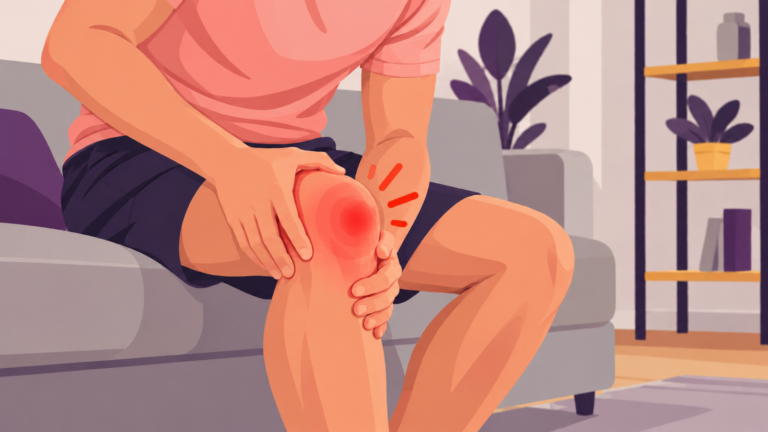
These joint injuries tend to be serious and may require a weekend or two of downtime, but for consistent gym-goers knee problems can often be more insidious. Squats, lunges, leg presses, and running exert a lot of load on the knee joint. While these movements are crucial for building lower-body strength, improper form, overtraining or weak supporting muscles can lead to pain and instability.
The knee is one of the body’s most complex and heavily used joints. It attaches a bone in the thigh (the femur) to one in the shin (the tibia), and facilitates motions like bending, straightening, and rotation. As the knee holds body weight and absorbs shock when exercising, it is particularly susceptible to strain during high-intensity exercise.
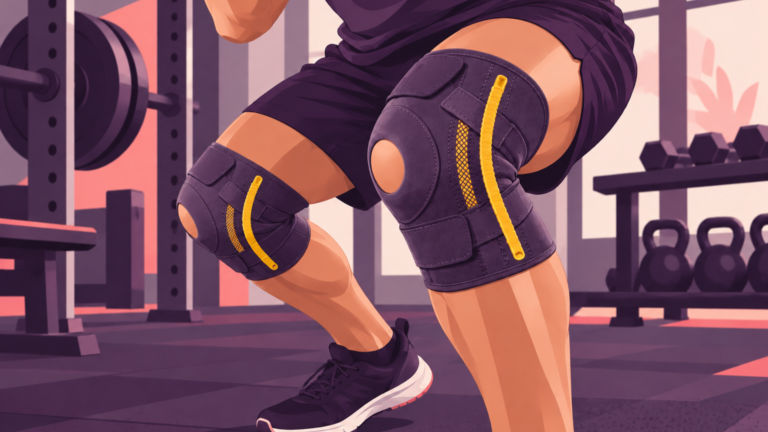
That is where knee support for gym workouts comes into play. So a lot of athletes and fitness people use knee sleeves, elbow braces or wraps to stabilize at the knees joints and reduce overall stresses in their training. But protective gear is only part of the picture; strengthening exercises and proper warm-up routines also are major factors in avoiding injuries.
Research and medical sources indicate that compression sleeves for knees may also stimulate blood circulation, minimize swelling in joints, and create a “feeling of stability” while moving. Many athletes rely on them because of the benefits of knee compression sleeves for joint stability and recovery. [1]
This guide covers everything you need to know regarding gym training knee support as well as the benefits of different types of knee supports, some strengthening exercises and tips to keep your knees safe when working out.
Knee Support in the Gym: Why It Is Needed
Knee support acts as a protection for the knee joint from extreme tension during workout. Powerlifting and fitness training the knees bear as high loads from their own body weight, external loads and repetitive movements.
Without proper support, this pressure can cause ligament strain, tendon inflammation or joint instability.
Reduces Joint Stress
During heavy exercises such as squats and leg presses, large compressive forces act on the knee joint. Knee sleeves or braces can help distribute pressure more evenly around the joint.
This compression gives slight stabilization and alleviates load on ligaments and tendons.
Improves Blood Circulation
Compression knee sleeves exert soft pressure on the knee region to improve blood circulation and oxygen delivery in nearby areas. Improved circulation promotes muscle recovery and decreases swelling post-workout. [3]
Better blood flow also aids in the removal of metabolic waste products that build up during exercise.
Enhances Joint Awareness
One more advantage of knee support is enhanced proprioception the body’s perception of its joints and how they move.
Compression sleeves activate sensory receptors in the skin and muscles surrounding the knee. More feedback will help athletes remain in proper alignment while performing exercises such as squats and lunges.
Being more aware of your movements can decrease the likelihood of making awkward movements that can lead to injury.
Reduces Swelling and Discomfort
Following heavy training sessions, some of the athletes develop swelling or stiffness around the knee joint. Compression gear aids in limiting fluid buildup and provides joint support during recovery. [4]
That can accelerate and improve post-workout recovery.
What are the Different Types of Kneecaps for Gym Workouts
Different Knee Supports In Fitness Training Each serves a specific purpose based on exercise intensity and what the athlete requires.
Knee Sleeves
Knee sleeves are the most popular type of knee support you will find in gyms.
They are made of elastic materials like neoprene and slide over the knee joint like a sleeve. The main function of these prototypes is to offer compression and heat.
Benefits
- Improves circulation
- Keeps joints warm during workouts
- Reduces stiffness
- Provides mild stability
Knee sleeves are commonly used in exercises such as squats, lunges, and leg presses by a lot of weightlifters.[5]
Who Should Use Them
- Beginners starting weight training
- Athletes who perform moderate to heavy levels of lifts
- People with mild knee discomfort
Knee Braces
Knee braces offer even more support than sleeves. They generally have straps, hinges or stiff structures to stabilize the knee joint.
In practice, the braces are often used for recovery from injuries like ligament tears or meniscus damage.
Benefits
- Greater joint stability
- Protection for injured knees
- Reduced risk of re-injury
But knee braces are usually prescribed by a doctor.
Knee Wraps
Knee wraps are long, elastic bands that are tightly wrapped around the knee joint before a heavy lift.
Powerlifters commonly wear them for squatting and leg presses.
Benefits
- Maximum compression and support
- Increased lifting stability
- Improved performance during heavy lifts
Because knee wraps apply a significant amount of pressure to the joint area, they are typically only used during heavy lifting workouts.
Causes of Knee Pain in the Gym
Knowing what causes knee pain during exercise is key to avoiding injury.
Poor Exercise Form
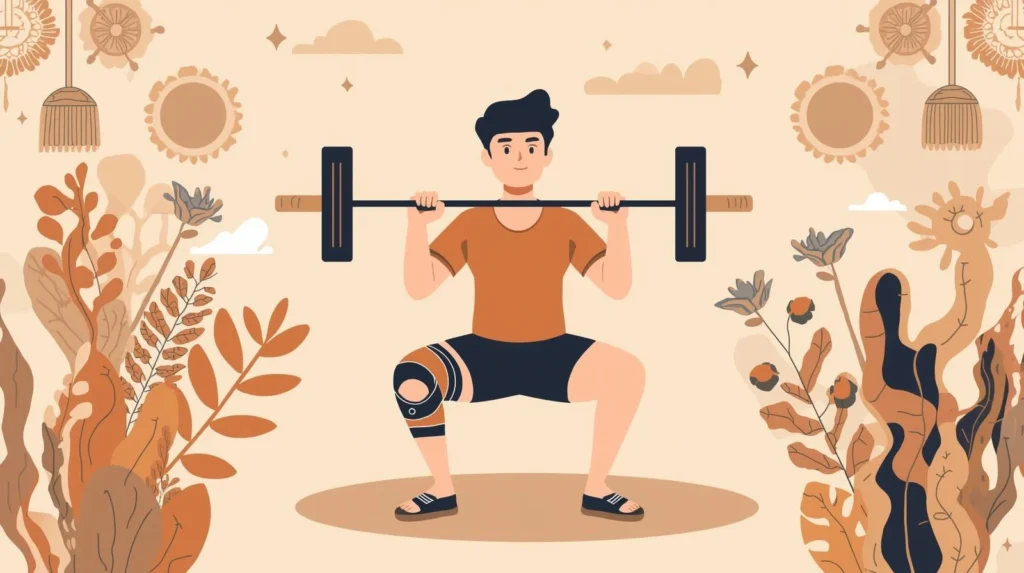
Poor form in exercise is not just the addition of unnecessary strain to your muscles; things like squats or lunges could be putting undue stress on the knee joint.
Allowing the knees to collapse inward as one squats, for example, puts undue pressure on ligaments.
Weak Supporting Muscles
The quadriceps, hamstrings, and glutes are all muscles that wrap around the knee joint and work to stabilize it.
Weakness in these muscles leads to increased stress on the knee when the person moves.
Overtraining
Missing rest and recovery This is where you will perform training too often without sufficient recovery, leaving it resulting in inflammation as well as overuse injuries.
Sudden Increase in Weight
Too much weight is added too quickly during strength training, overloading the knee joint
Building up slowly is the key to injury prevention.
The Best Gym Exercises for Everyone Who Wants to Strengthen Their Knees
Building strength around the knee is one of the best methods to prevent injury and increase stability.
Health experts recommend quadriceps, hamstrings, glutes and calf muscle exercises to promote a healthy knee. [6]
Here are some of the best knee-strengthening exercises.
Bodyweight Squats
One of the top moves for developing lower-body strength are bodyweight squats.
- Muscles Targeted
- Quadriceps
- Glutes
- Hamstrings
How to Perform
- Stand with feet shoulder-width apart.
- Begin by squatting down by flexing the knees and hips
- Keep your chest up and back straight.
- Return to the starting position.
Squats target the muscles that stabilize the knee joint and improve overall mobility.
Glute Bridges
Glute bridges help strengthen the glutes and hamstrings, two muscle groups that support the knees.
Steps
- Lie faceup with knees bent.
- Put your feet flat on the floor.
- Drive your hips up while clenching the glutes.
- Hold for several seconds and lower carefully.
Strong glutes alleviate force on the knee during movement, such as running and squatting).
Step-Ups
Step-ups help with balance and work the muscles that support the knee.
Steps
- Face a step or bench in front of you.
- Put one foot on the platform.
- Drive down through the heel to rise up.
- Step back down and repeat.
This movement resembles common activities such as stair climbing.
Leg Extensions
Leg extensions isolate the quadriceps, which are the big muscles at the front of your thigh.
Put simply, strong quadriceps stabilize the knee joint in actions like walking, running or jumping.
Hamstring Curls
Hamstring curls work the muscles at the back of the thigh.
Knee stability depends on strength balance between the quadriceps and hamstring muscles.
Utilizing Knee Support During Your Workouts
To maximize your benefits, it is essential to use the knee support correctly.
Choose the Right Size
Knee sleeves should be tight but not cut off circulation.
A sleeve that’s too tight can be uncomfortable or even numb.
Wear Them During High-Stress Exercises
Knee supports are particularly beneficial during high-load joint activities, including:
- Squats
- Deadlifts
- Lunges
- Leg presses
Avoid Over-Dependence
Although knee support can enhance stability, it must not serve as a substitute for appropriate training and strengthening workouts.
The point of this strength training is to better stabilize the joint so that even when unsupported, it doesn’t wobble or shake.
When You Should Never Use Knee Support
In many situations, knee sleeves and braces can be helpful, however, it wouldn’t apply to every condition.
If you have any of these conditions, do not use knee supports:
- Severe knee injury
- Torn ligaments
- Persistent swelling
- Sudden sharp pain
Compression sleeves just cannot fix structural damage to the knee joint. Serious injuries require medical evaluation. [7]
How to Prevent Knee Impact When Working Out at the Gym
A healthy set of knees involves a combination of good exercise habits, supportive equipment and recovery strategies.
Warm Up Before Training
A warm-up prepares the muscles and joints for exercise proper.
Examples include:
- Light jogging
- Dynamic leg stretches
- Bodyweight squats
- Focus on Proper Form
Performing the move correctly will lessen undue stress on your knee joint.
For example, during squats:
- Keep knees aligned with toes
- Avoid collapsing inward
- Maintain a neutral spine
Strengthen Supporting Muscles
Exercises that build muscle in the quadriceps, hamstrings and glutes can support stabilization of the knee.
Increase Training Intensity Gradually
Gradual progression allows the ligaments, muscles and joints to adapt to packing on heavier loads.
Stay Hydrated and Rested
And recovery (which generally refers to muscular performance, soreness and injury prevention) is dependent on hydration as well.
Recovery Strategies for Healthy Knees
Recovery to avoid persistent knee pain
Stretching: Stretching regularly increases flexibility and decreases muscle tightness.
Foam Rolling: Foam rolling relieves tension in the muscles around your knee.
Active Recovery: Light activities, including walking or cycling, also promote blood circulation and help muscles recover.
Ice Therapy: Ice application post-strenuous workouts will help in fighting inflammation.
Conclusion
Knees are needed to train in the gym safely and appropriately. Because the knee joint bears a significant share of much of the body’s weight while in motion, it is susceptible to stress during exercises performed at high intensity.
Knee support for gym workouts knee sleeves, braces or wraps help improve stability, reduce discomfort and assist recovery. Specifically, compression sleeves can increase circulation, reduce swelling and improve joint awareness while exercising.
However, supportive gear should never take the place of good training habits. The best way to protect the knee joint, she said, is to strengthen the muscles around it, work on good form during exercise and follow a balanced workout routine.
Should you want to keep your knees and the muscle groups that support them thousands of miles from any cotton ball, be sure to implement smart changes alongside knee support.
Frequently Asked Questions
Yes. They also provide stability and joint awareness, which can help athletes maintain proper form throughout their entire movement.
For most newcomers knee supports are not needed unless pain is being experienced or an injury has been sustained in the past.
Knee sleeves are more for general workouts and light support, while knee braces provide stronger stabilization for a bad knee.
The risk of injury can be reduced with knee support, but the best effects are achieved when combined with good training technique and strengthening exercises.
They should feel snug and supportive without being numbing or blood-circulation-restricting.
References
- HansaPlast India. (2024). Exploring the Benefits of Compression Sleeves for Your Knees.https://www.hansaplastindia.com/articles/health-and-protection/knee/exploring-the-benefits-of-compression-sleeves-for-your-knees
- Betterhood. (2025). Real Benefits of Knee Compression Sleeves./learn/real-benefits-of-knee-compression-sleeves/
- Doctor Arthritis. (2024). Benefits of a Compression Knee Sleeve.https://doctorarthritis.org/blogs/about-arthritis/benefits-of-a-compression-knee-sleeve
- Compression Knee Sleeves. (2024). What Does a Knee Compression Sleeve Do.https://compressionkneesleeves.com/what-does-a-knee-compression-sleeve-do/
- PubMed. (2019). Effects of Simple Knee Sleeves on Pain and Knee Adduction Moment.https://pubmed.ncbi.nlm.nih.gov/31597554/
- Health.com. (2026). 8 Effective Knee-Strengthening Exercises to Build Stability and Combat Pain.https://www.health.com/knee-strengthening-exercises-11921929
- Orthopedic Institute of New Jersey. (2025). Compression Sleeves for Knee Pain: When They Help: and When They Don’t.https://orthopedicnj.com/news/compression-sleeves-for-knee-pain