Knee Pain Reasons When Climbing Stairs? Here’s How to Fix Them

In this article
- Understanding Why Knees Hurt on the Stairs
- Most Frequent Knee Pain Causes When Climbing Stairs
- Recognizing Symptoms and Daily Life Limitations
- Assessment and Diagnosis: Finding Your Specific Knee Pain Reason
- Evidence-Based Treatment Options for Stair-Related Knee Pain
- Effective Home Remedies and Pain Management Strategies
- Lifestyle and Behavioral Changes to Support Knee Health on Stairs
- Preventative Measures and Long-Term Knee Care Strategies
- Conclusion
- References
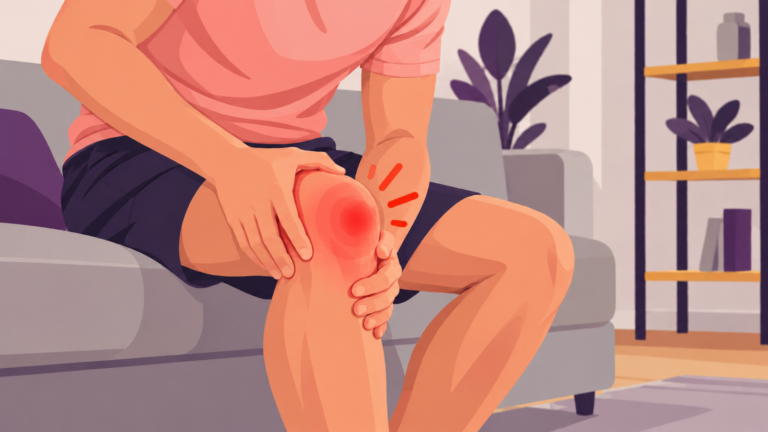
Our knees are an extremely important body part, though we do not give so much credit to them. Knees are useful for doing daily activities, for example, climbing stairs. With discomfort in knees, you can still manage to step up or down from a staircase, but you cannot bear it for the long term. Hence, to find a permanent solution to knee pain, you need to identify its real cause to live a better life.
This comprehensive article provides detail of lifestyle modification, reviews of the various treatment options, and descriptions of the various causes of knee pain when climbing up and down the stairs.
Just imagine, if your knees could speak, they would more likely recommend you some tips for pain relief.
Understanding Why Knees Hurt on the Stairs
The Biomechanics of Stair Climbing and Knee Stress
Climbing stairs demands more from your knees than walking on flat surfaces. Each step requires greater knee flexion bending and supporting your entire body weight, which can reach three to six times your normal load [1]. This makes stair climbing a stern test for any underlying knee issues.
Your knee is like a hinge, which can be easily opened and closed. Once the weak or broken hinge is worn or misaligned, each climb becomes hard. The major muscles that cushion and support the joint are the hamstrings, glutes, and quadriceps. When these muscles are weakened or completely imbalanced, extra strain is placed on the knee leading to pain and additional damage.
Common Causes of Knee Pain Triggered by Stairs
- Patellofemoral Pain Syndrome (PFPS): It is also known as runner knee or climber knee; the issue may be induced by the incorrect movement of the kneecap. This is very painful around your knee’s front region.
- Osteoarthritis: Osteoarthritis leads to friction, which occurs when the cartilage gets damaged and the bone is exposed. This is particularly annoying when you are forced to bend your knees heavily to ascend the stairs.
- Tendonitis or Bursitis: The inflammation of either the muscles or the bursae due to overuse causes tendinitis or bursitis.
- Ligament issues: The weak or ruptured ligaments can make you less stable while doing steep climbs and also expose you to the risk of pain.
How Knee Pain Reasons Differ from Other Knee Discomforts?
Not all knee pain is caused by structural damage. Sometimes, nerve issues, muscle imbalances, or systemic inflammation from other diseases like gout can mimic problems caused by osteoarthritis or injury [2]. Recognizing the precise reason is vital, and climbing stairs often highlights these specific issues because of the extra load and movement angle.
Humor alert: Your knees might be saying, “Hey, slow down, or we’ll just take the stairs without you next time!”
Most Frequent Knee Pain Causes When Climbing Stairs
Patellofemoral Pain Syndrome (PFPS) and Its Impact
PFPS occurs when the patella or kneecap, fails to slide over the femur. Stepping up the stairs causes strain to your kneecap, particularly when your muscles are not properly skewed and aligned. The front side of the knee pain is intermittent and dull in nature and is aggravated when you squat, climb stairs, or sit too long.
Osteoarthritis and Cartilage Wear Concerns
Osteoarthritis makes your joints rough and painful due to the degradation of the joint cartilage [3]. Every single step increases the strain on already damaged cartilage, which may lead to sharp pain, stiffness, and, in some cases, crepitus, a clicking sound in the joint. Although OA mainly occurs among older adults, there can also be a risk of developing the condition at an early age due to engaging in repetitive tasks or experiencing injuries.
Tendonitis and Bursitis: Overuse Inflammations
Repetitive use or sudden overload can inflame tendons (like your patellar tendon) or bursae, fluid-filled sacs that cushion the joint [4]. These inflammations cause localized throbbing pain, especially when ascending stairs or squatting.
Ligament Instability and Muscular Imbalances
Weak or torn ligaments, particularly the anterior cruciate ligament (ACL) or medial collateral ligament (MCL), compromise joint stability. Muscular imbalances such as tight hamstrings and weak quadriceps place uneven pressure on the joint, resulting in pain and potential instability during stair climbing.
Recognizing Symptoms and Daily Life Limitations
Identifying Pain Patterns
If you notice pain primarily when ascending or descending stairs but not on flat ground, it likely points toward patellofemoral issues or ligament strain. Pain localized around the kneecap, accompanied by grinding or clicking sounds, is a classic symptom [5].
How Does Stair-Climbing Pain Affect Mobility and Activities?
Persistent knee pain during climbing stairs can lead to activity avoidance, reduced independence, or social withdrawal. The physical challenge becomes mental fear “Will I make it to the top without pain?” – a stress that hampers daily functionality.
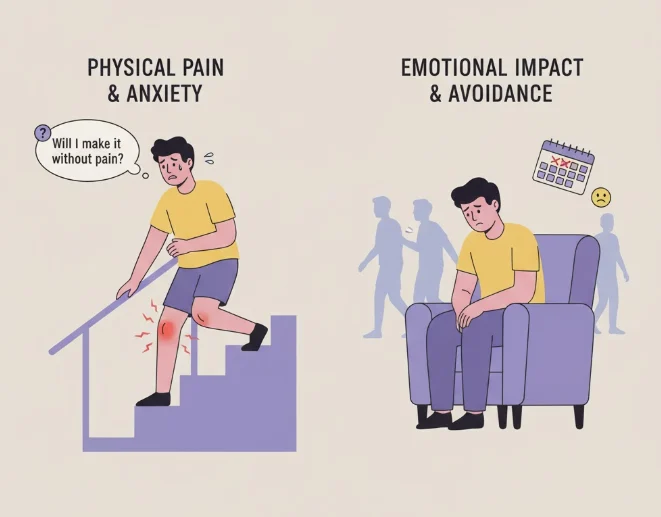
Psychological Effects: Fear of Stairs and Activity Avoidance
Over time, fear may cause you to avoid stairs altogether, leading to muscle wasting and worse joint health, a self-fulfilling prophecy where fear feeds pain.
Laughter prescription: If your knees could talk, they’d request a vacation, but only if you learn how to treat the root causes!
Assessment and Diagnosis: Finding Your Specific Knee Pain Reason
Clinical Tests and Physical Assessments
A healthcare professional will evaluate your gait, joint alignment, and muscle strength and perform functional tests such as the patellar grind test or joint stability assessments.
Imaging and Use of Knee Pain Location Charts
X-rays and MRI scans reveal cartilage degradation and ligament injuries [6]. Using a location chart helps pinpoint whether pain originates from the front, sides, or back of the knee, which is crucial for targeted treatment.
When to Seek Medical Evaluation?
If pain persists beyond a few weeks, worsens, or severely hampers activities, consult an orthopedic specialist. Early diagnosis guides effective treatment and prevents worsening.
Evidence-Based Treatment Options for Stair-Related Knee Pain
Treatment: Medications to Physiotherapy
- NSAIDs for pain and inflammation control.
- Physiotherapy to strengthen supporting muscles, correct biomechanics, and improve joint stability.
- Injections like corticosteroids or hyaluronic acid for pain relief in severe cases.
Exercises Targeting Stair-Related Knee Pain Relief
Safe, targeted exercises include:
- Quadriceps strengthening (straight leg raises).
- Hip abduction exercises.
- Hamstring stretches.
- Balance and proprioception training.
Avoid overexertion; listen to your knees, if it hurts, don’t do it.
Role of Knee Braces and Caps
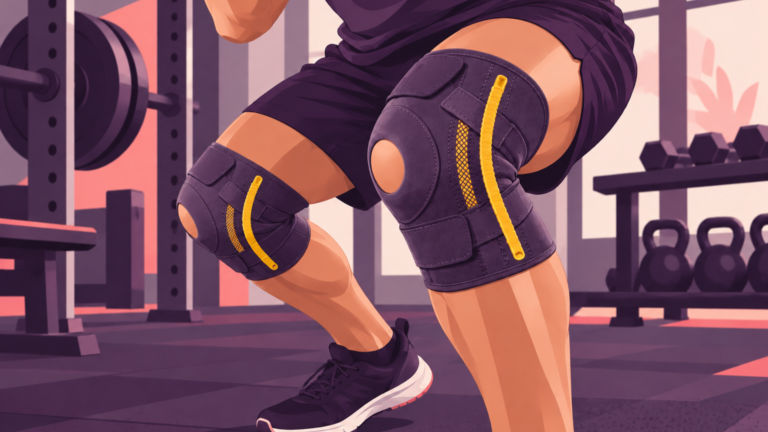
Supportive braces or caps stabilize the kneecap, offload stress, and improve confidence during activity. Use these judiciously under guidance.
When Surgery Might Be Needed?
Surgical interventions like arthroscopy or joint replacement are last options, reserved for severe cartilage loss or ligament tears unresponsive to conservative care.
Effective Home Remedies and Pain Management Strategies
Cold and Heat Therapy
Cold packs reduce tissue inflammation and dull pain (apply 20 minutes on/off) [7]. Heat therapy relaxes tightened muscles and eases morning stiffness.
Rest and Activity Modifications
Limit stairs during flare-ups; use stairlifts if available. Incorporate low-impact activities like swimming and cycling.
Yoga and Natural Approaches
Yoga poses targeting hip and thigh muscles improve joint support. Herbal oils like turmeric or Arnica may reduce inflammation; discuss with your doctor before starting.
Lifestyle and Behavioral Changes to Support Knee Health on Stairs
Weight Management and Nutrition
Losing weight reduces joint load; anti-inflammatory foods (berries, omega-3-rich fish) support recovery.
Footwear Choice
Supportive, cushioned shoes with good arch support ease pressure during stairs and everyday walking.
Posture and Movement Correction
Practice proper alignment when climbing stairs; use the entire foot. Don’t overreach or lean forward when ascending. Use handrails to distribute load and prevent falls.
Preventative Measures and Long-Term Knee Care Strategies
Strengthen Supporting Muscles
Regular strengthening exercises for quadriceps, hamstrings, and glutes stabilize the knee and prevent future pain.
Incorporating Low-Impact Activities Like Swimming and Cycling
These keep you active without joint overload.
Regular Monitoring and Early Intervention Protocol
Timely assessment of symptoms and adherence to rehab exercises prevent degenerative changes and prolong joint health.
Conclusion
Knee pain while climbing can occur due to multiple reasons. Proper treatment is possible with real-time diagnosis and making positive changes in lifestyle. All you need to do is to have enough patience, as bringing back mobility is a gradual process. If you take care of your knees now, they can serve you for a long time.
Consistent knee pain can give rise to ankle pain as well. Know how to cure it:
Frequently Asked Questions:
1. Why do my knees hurt mainly when climbing stairs?
The extra load and bending during stairs aggravate patellofemoral and cartilage issues often hidden during flat walking.
2. What’s the fastest way to relieve knee pain on stairs?
Ice, rest, and exercises targeting thigh muscles provide quick relief; use supports judiciously.
3. Can exercises prevent knee pain associated with stairs?
Strengthening key muscles improves joint stability and reduces pain during stair climbing.
4. How effective are knee braces or caps for stair pain?
They can support and reduce pain temporarily but work best with a muscle-strengthening program.
5. When should knee pain when climbing stairs prompt a doctor visit?
Seek care when pain persists, worsens, affects function, or is associated with swelling or locking.
References
- Costigan, P. A., Deluzio, K. J., & Wyss, U. P. (2002). Knee and hip kinetics during normal stair climbing. Gait & posture, 16(1), 31-37. https://doi.org/10.1016/S0966-6362(01)00201-6
- Cha, Y., Lee, J., Choy, W., Lee, J. S., Lee, H. H., & Chae, D. S. (2024). Pathophysiology and treatment of gout arthritis; including gout arthritis of hip joint: a literature review. Hip & pelvis, 36(1), 1. doi: 10.5371/hp.2024.36.1.1
- Man, G. S., & Mologhianu, G. (2014). Osteoarthritis pathogenesis–a complex process that involves the entire joint. Journal of medicine and life, 7(1), 37. https://pmc.ncbi.nlm.nih.gov/articles/PMC3956093/
- Speed, C., Hazleman, B., & Dalton, S. (2006). Fast facts: soft tissue disorders. Karger Medical and Scientific Publishers. https://books.google.com/books?hl=en&lr=&id=Z19uDwAAQBAJ&oi=fnd&pg=PP1&dq
- Hegmann, K. T., Biggs, J. J., Hughes, M. A., Lichtblau, E., Coward, D. B., Iorio, C. D., … & Spector, J. T. (2019). Knee disorders. https://actionacademy.co/cwci/wp-content/uploads/2018/04/ACOEM-Knee-Disorder.pdf
- Bruyère, O., Genant, H., Kothari, M., Zaim, S., White, D., Peterfy, C., … & Reginster, J. Y. (2007). Longitudinal study of magnetic resonance imaging and standard X-rays to assess disease progression in osteoarthritis. Osteoarthritis and cartilage, 15(1), 98-103. https://doi.org/10.1016/j.joca.2006.06.018
- Fiscus, K. A., Kaminski, T. W., & Powers, M. E. (2005). Changes in lower-leg blood flow during warm-, cold-, and contrast-water therapy. Archives of physical medicine and rehabilitation, 86(7), 1404-1410. https://doi.org/10.1016/j.apmr.2004.11.046