Knee Pain Recovery: Simple Tips for Faster Healing

In this article
- Understanding Knee Pain Recovery and Healing Stages
- Home-Based Recovery Strategies
- Gentle Exercises to Support Recovery
- Common Causes That Slow Knee Pain Recovery
- Home Care Strategies for Faster Knee Pain Recovery
- Best Exercises to Support Knee Pain Recovery
- Strengthening the Knee for Long-Term Stability
- Role of Nutrition and Weight Management in Knee Recovery
- Signs Your Knee Pain Recovery Needs Medical Attention
- Nutrition & Lifestyle for Knee Recovery
- One-Minute Stretch Routine for Knee Relief
- Compression Support & Bracing
- When to Seek Medical Help
- Summary
Knee pain is common, whether due to injury, overuse, age-related wear, or inactivity. It can make walking, standing, and routine activities uncomfortable. Fortunately, simple, evidence-based strategies can accelerate recovery, helping you regain strength, stability, and mobility with minimal discomfort.
Understanding Knee Pain Recovery and Healing Stages
A clear knee pain recovery timeline helps set realistic expectations and prevents frustration. Recovery generally occurs in stages:
- Acute phase (0–7 days): Focus on pain control, swelling reduction, and protection using the POLICE protocol for knee injury.
- Sub-acute phase (1–6 weeks): Gradual return to movement with home treatment for knee pain, light strengthening, and mobility work.
- Reconditioning phase (6+ weeks): Progressive loading, knee joint stability exercises, and functional movements to prevent recurrence.
Healing speed varies depending on injury type, age, activity level, and adherence to rehabilitation.
Home-Based Recovery Strategies
Protection & Pain Control
- Brief rest initially is useful, but avoid prolonged immobilization, early gentle activity aids healing.
- Use over-the-counter NSAIDs or acetaminophen if needed, following medical advice.
Ice or Cold Compression
- Apply an ice-pack wrapped in a towel to the knee for 15-20 minutes, multiple times a day, ideally during the first 48-72 hours.
- Cold compression wraps reduce pain and swelling while improving circulation and recovery post-injury or post-surgery.
Compression
- Wear elastic knee sleeves or bandages to support the joint and limit swelling avoid wrapping too tightly to prevent circulation issues.
Elevation
- Keep your leg elevated above heart level using pillows, this helps reduce fluid buildup and alleviate discomfort.
Gentle Exercises to Support Recovery
Range-of-Motion & Mobility Exercises
- Heel slides (lying supine, sliding heel toward buttock slowly) gently mobilize the knee joint and improve flexibility.
- Knee swings (sit with legs dangling, gently bend and straighten) can ease stiffness and improve fluid movement.
- Patellar mobilization (gently gliding kneecap in all directions) improves tracking and reduces stiffness.
Strengthening for Support
- Straight-leg raises build quadriceps strength without straining the knee.
- Hip abduction exercises support knee alignment and reduce load on the joint.
- Bodyweight squats and eccentric movements (e.g., slow descent) strengthen quads, glutes, calves, and hamstrings for joint stability.
Therapeutic Exercise Benefits
- Regular low-impact aerobic activity and resistance training can reduce pain, stiffness, and improve function, especially in osteoarthritis.
Common Causes That Slow Knee Pain Recovery
Several factors can delay healing and prolong discomfort, especially knee pain after walking or standing:
- Ignoring swelling and skipping early care
- Prolonged inactivity or excessive rest
- Weak quadriceps, glutes, or hip stabilizers
- Poor footwear or altered walking mechanics
- Excess body weight increasing joint stress
- Returning to high-impact activity too soon
Addressing these early improves knee rehabilitation at home outcomes.
Home Care Strategies for Faster Knee Pain Recovery
Effective home treatment for knee pain combines symptom control with gradual movement:
- Follow knee swelling reduction methods such as ice, compression, and elevation
- Use a knee brace for pain recovery or sleeve during activity if swelling or instability persists
- Avoid long sitting periods, gentle movement promotes circulation
- Transition early from rest to controlled loading to prevent stiffness
Consistency is key to sustainable recovery.
Best Exercises to Support Knee Pain Recovery
Targeted exercises for knee pain recovery restore motion and reduce stiffness safely:
- Heel slides and knee swings for mobility
- Patellar mobilization to improve joint tracking
- Straight-leg raises for quadriceps activation
- Low-impact cardio like cycling or swimming
These exercises improve circulation, reduce pain, and accelerate functional return.
Strengthening the Knee for Long-Term Stability
Long-term relief depends on knee joint stability exercises that distribute load evenly:
- Quadriceps strengthening to protect the knee joint
- Hip abduction and glute strengthening to control alignment
- Eccentric squats and step-downs to improve shock absorption
Strong surrounding muscles reduce re-injury risk and support daily movement.
Role of Nutrition and Weight Management in Knee Recovery
Proper nutrition for joint healing supports tissue repair and reduces inflammation:
- Omega-3 fatty acids help manage joint inflammation
- Vitamin D supports bone and muscle health
- Maintaining a healthy weight reduces knee joint load significantly
Diet alone won’t fix knee pain but it strongly supports rehabilitation success.
Signs Your Knee Pain Recovery Needs Medical Attention
Seek professional care if you notice:
- Pain or swelling worsening despite home care
- Difficulty bearing weight or instability
- Locking or catching sensations
- Limited improvement beyond the expected knee pain recovery timeline
Early evaluation prevents chronic damage and long-term mobility loss.
Nutrition & Lifestyle for Knee Recovery
Reduce Inflammation with Diet
- Include anti-inflammatory foods such as turmeric, ginger, fatty fish (omega-3s), and berries or leafy greens to support joint health.
- Maintain a healthy weight: excess body weight increases knee joint load significantly, contributing to pain and degeneration.
Supplements: Proceed with Caution
- Vitamin D & K may support bone and joint health, evidence is stronger than for glucosamine or turmeric supplements alone.
- Many other supplements (glucosamine, chondroitin) have limited benefit and lack long-term efficacy.
One-Minute Stretch Routine for Knee Relief
Perform daily to ease tension and promote flexibility:
- Quadriceps stretch: Standing, pull one foot toward glutes and hold for 15–20 seconds per side.
- Hamstring stretch: While seated, extend one leg forward and lean gently to feel a stretch.
- Calf stretch: Stand facing a wall, place one leg behind, heel down, and lean forward.
Repeat on both sides for improved comfort and range.
Compression Support & Bracing
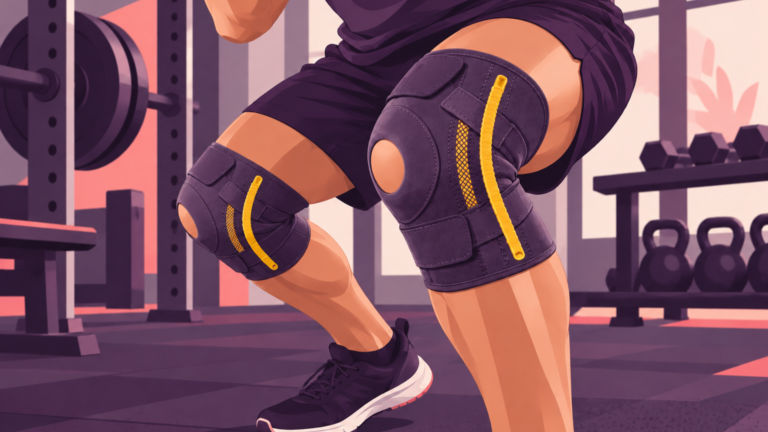
Use a knee sleeve or wrap if swelling or instability persists, but avoid over-tight compression to ensure circulation remains healthy. A brace may be more beneficial during activity or rehabilitation stages.
When to Seek Medical Help
Consult a healthcare provider if you experience:
- Persistent or worsening knee pain beyond a few days
- Inability to bear weight or limited mobility
- Locking, giving way, or instability
- Swelling that doesn’t improve with self-care
- Numbness or tingling in the leg
Professional evaluation may include imaging (X‑ray, MRI), physiotherapy, or in some cases, surgical referral.
Summary
Faster, safer knee pain recovery is possible with the right combination of early protection, gentle movement, strengthening, and supportive nutrition. Use POLICE for initial care and transition quickly to motion-based rehabilitation. Stay consistent with quadriceps and hip strengthening to support joint integrity. Nutrition and weight management further support healing and prevent recurrence.
If you’re unsure what level of activity is appropriate or have persistent symptoms, always consult a healthcare professional, personalized guidance ensures safe recovery and long-term knee health.
References
- Bleakley, C. M., Glasgow, P., & MacAuley, D. C. (2012). PRICE needs updating, should we call the POLICE? British Journal of Sports Medicine, 46(4), 220–221. https://doi.org/10.1136/bjsports-2011-090297
- van der Esch, M., Steultjens, M. P., Harlaar, J., Knol, D. L., Lankhorst, G. J., & Dekker, J. (2006). Joint proprioception, muscle strength, and functional ability in patients with osteoarthritis of the knee. Arthritis & Rheumatism, 55(4), 678–685. https://doi.org/10.1002/art.22245
- Fransen, M., McConnell, S., Harmer, A. R., Van der Esch, M., Simic, M., & Bennell, K. L. (2015). Exercise for osteoarthritis of the knee: A Cochrane systematic review. British Journal of Sports Medicine, 49(24), 1554–1557. https://doi.org/10.1136/bjsports-2015-095424
- Kolasinski, S. L., Neogi, T., Hochberg, M. C., Oatis, C., Guyatt, G., Block, J., … & Nelson, A. E. (2020). 2019 American College of Rheumatology/Arthritis Foundation guideline for the management of osteoarthritis of the hand, hip, and knee. Arthritis Care & Research, 72(2), 149–162. https://doi.org/10.1002/acr.24131
- Golightly, Y. M., Allen, K. D., & Caine, D. J. (2012). Osteoarthritis and the impact of weight loss. Current Rheumatology Reports, 14(2), 128–136. https://doi.org/10.1007/s11926-012-0242-4
- Messier, S. P., Loeser, R. F., Miller, G. D., Morgan, T. M., Rejeski, W. J., Sevick, M. A., … & Pahor, M. (2004). Exercise and dietary weight loss in overweight and obese older adults with knee osteoarthritis: The Arthritis, Diet, and Activity Promotion Trial. Arthritis & Rheumatism, 50(5), 1501–1510. https://doi.org/10.1002/art.20256
- Veronese, N., Koyanagi, A., Stubbs, B., Cooper, C., Guglielmi, G., & Reginster, J. Y. (2019). Vitamin K and osteoarthritis: A systematic review. Reumatismo, 71(1), 28–36. https://doi.org/10.4081/reumatismo.2019.1095
- Deyle, G. D., Allison, S. C., Matekel, R. L., Ryder, M. G., Stang, J. M., Gohdes, D. D., & Garber, M. B. (2005). Physical therapy treatment effectiveness for osteoarthritis of the knee: A randomized comparison of supervised clinical exercise and manual therapy procedures versus a home exercise program. Physical Therapy, 85(12), 1301–1317. https://doi.org/10.1093/ptj/85.12.1301