Full Body exercises: Strength, Fat Loss and Efficiency
In this article
- The Science Behind Total Body Training
- Fundamentals of an Effective Total Body Regimen
- Progressive Overload
- The Master List of Essential Full Body Exercises
- The Deadlift (Hip Dominant)
- Bench Press and Push-Ups (Horizontal Push)
- Re-positioning the Row (Horizontal & Vertical Pull)
- Overhead Press (Vertical Push)
- Lunges and Split Squats (Unilateral)
- Full Body Workouts for Any Space
- Specialized 4-Week Training Blocks
- And Now for The First Time: Nutrition and Recovery To Fuel The Full Body Athlete
- Common Mistakes Averted In Full Body Training
- Conclusion
- Frequently Asked Questions
- References
For decades, the conventional gym regimen was pretty predictable bro splits. Today was chest day, Tuesday was back day, Wednesday was legs and so forth. A number of lifters were in the gym five and even six days because they wanted to train every muscle group once a week.
But experience has shown thousands of athletes that there’s a smarter way to train, and modern exercise science backs that up.
Wherein a traditional bodybuilding-style split isolates muscle groups once a week, full body training focuses on hitting every major muscle group several times per week. In practical terms, that often translates into three efficient workouts a week in which every session works your full body.
The results?
- Faster strength gains
- Higher calorie burn
- More efficient workouts
- Improved athletic performance
So this guide will serve as your ultimate guide to full body training. Whether you’re new to lifting, starting your first programme or someone who’s been doing it forever but wants to make everything as efficient as possible, this article will lead you through:
- The science behind full body workout
- What makes some routines better than others
- The fundamentals every athlete should have down
- Programs for building muscle, losing fat, and gaining strength
- Nutrition, recovery, and common mistakes
When you finish this guide, you will know exactly how to build and implement a high-performance full body training system that will grow with you for years to come.
The Science Behind Total Body Training
From understanding why full body training works, it becomes a lot easier to stick with the approach. There are several key physiological mechanisms that explain why this is such an effective method.
Protein Synthesis Optimization
The process of muscle growth is called muscle protein synthesis (MPS). When you do resistance training, your body starts repairing and rebuilding muscle fibers, which makes them stronger and thicker.
But this response is not permanent.
Research demonstrates that muscle protein synthesis generally rises for about 24 to 48 hours following a resistance workout before it returns to baseline levels. [1]
This has big implications for how frequently we train.
If you only train once a week, the muscle will go days without being stimulated. Conversely, training that muscle every 48 hours can keep protein synthesis elevated to a greater extent.
Hence, many modern strength coaches suggest training each muscle group 2 to 3 times this week which coincidentally harmonizes well with full body workouts.
Nutrient timing and recovery are an additional consideration. Research says It’s also been found that muscle re-building occurs following exercise not only when regular amounts of protein are consumed, but also with recovery times. [2]
Metabolic Demand and EPOC
Full body workouts significantly raise metabolic demand as well.
With simultaneous activation of large muscle groups, like squats, deadlifts, and presses the body requires much more energy than isolation movements.
This activates a process known as Excess Post-exercise Oxygen Consumption (EPOC).
That’s Excess Post-exercise Oxygen Consumption, or EPOC, the increased oxygen intake and metabolic rate that follow a workout. What this means is that your body keeps burning calories to replenish oxygen levels, repair muscle trauma and resupply its energy stores.
Being that compound full body movements elicit a greater EPOC response, these exercises can be directly correlated with fat loss when completed in conjunction with adequate nutrition [8]
Hormonal Synergy
The systemic hormonal response is one of the lesser-known benefits from full body training.
Lifting heavy compound movements triggers the release of key anabolic hormones such as:
- Testosterone
- Growth Hormone
- Insulin-like Growth Factor (IGF-1)
These hormones contribute to muscle repair, strength building, and overall physical performance.
Since full body workouts use multiple muscle groups at a time, they create a greater hormonal stimulus than smaller isolation exercises.
Fundamentals of an Effective Total Body Regimen
Full body training can be efficient, but the results depend heavily on how the routine is structured.
There are three principles that define a successful program.
Compound vs Isolation Movements
At the heart of full body training are compound movements.
Compound movements use more than one joint and muscle group at a time.
Examples include:
- Squats
- Deadlifts
- Bench presses
- Pull-ups
- Overhead presses
Isolation exercises focus on one muscle group at a time, such as bicep curls or triceps extensions.
If you want to achieve the best possible results, approximately 80% of your training should consist of compound movements.
Why?
Because compound lifts:
- Burn more calories
- Stimulate more muscle fibers
- Improve coordination and stability
- Build functional strength
Isolation movements still have some value but mostly as accessory work.
The Rule of Three
If you want to ever get into a very simple framework for organizing full body training, just look at the Rule of Three.
Frequency
Train 3 days per week.
Example schedule:
- Monday
- Wednesday
- Friday
That means you have enough recovery between sessions, but ample stimulus.
Intensity
Intensity is how difficult a set feels.
One handy scale is Rate of Perceived Exertion (RPE).
For most workouts: RPE 7to 9
Meaning: You end every set with 1to 3 reps in reserve.
This balance allows for more progress with less risk of injury.
Volume
Volume is the amount of work done.
Typical guidelines:
- 3 to 5 exercises per session
- 3 to 4 sets per exercise
- 5 to 12 reps depending on goals
This is breaching sufficient stimulus for the growth and not too fatigue.
Progressive Overload
You have to progressively challenge yourself or no training plan is effective.
This principle is known as progressive overload.
There are a few ways you can overload muscle:
- Increase weight
- Increase reps
- Increase sets
- Improve exercise difficulty
- Reduce rest periods
A simple progression method:
- Week 1: 3 time 8 reps
- Week 2: 3 time10 reps
- Week 3: Increase weight
- Week 4: Repeat cycle
Regardless, tracking your workouts is key to making sure you progress.
The Master List of Essential Full Body Exercises
The ultimate full body routine boils down to the following movements.
The Squat (Knee Dominant)
There are few exercises that rival the effectiveness of the squat.
Commonly known as the king of exercises, squats work:
- Quadriceps
- Glutes
- Hamstrings
- Core
- Lower back
Common Variations
Back Squat
The barbell sits across the upper back. This variant permits the heaviest loads and is a mainstay of strength training.
Front Squat
The barbell rests on the back of shoulders. This targets the quadriceps more and asks for more core stability.
Goblet Squat
Done with a dumbbell or kettlebell clasped at chest height. This is perfect for squat mechanics for beginners.
Key Form Cues
- Sit back into the hips
- Keep the chest proud
- Maintain a neutral spine
- Push knees outward
It protects the lower back while enhancing muscle engagement.
The Deadlift (Hip Dominant)
Deadlifting is one of the most functional strength movements on earth.
It works almost every major muscle group, including:
- Glutes
- Hamstrings
- Lower back
- Core
- Upper back
- Forearms
Deadlift Variations
Conventional Deadlift
Feet hip-width apart. The barbell is driven through the hips to lift from the ground.
Sumo Deadlift
Feet apart pointing outward. This relieves lower back tension and targets inner thighs.
Romanian Deadlift (RDL)
Performed with minimal knee bend. This variation places a lot of emphasis on the hamstrings.
The Hinge vs Squat Distinction
A deadlift is a hip hinge , not a squat.
Key difference:
- Squats bend at the knees
- Deadlifts hinge at the hips
This distinction greatly improves lifting mechanics.
Bench Press and Push-Ups (Horizontal Push)
The bench press is the most iconic upper body movement.
Primary muscles involved:
- Chest
- Triceps
- Shoulders
Bench Press Variations
Barbell Bench Press
Permits heavier loads and is often used in strength programs.
Dumbbell Bench Press
Enhances stability and minimizes muscle imbalances
Push-Ups
One of the best bodyweight moves out there.
Push-ups are one thing you can scale at any level:
- Incline push-ups for beginners
- Standard push-ups for intermediates
- Weighted push-ups for advanced athletes
Re-positioning the Row (Horizontal & Vertical Pull)
Pulling exercises counteract pushing movements and postural difficulties.
Primary muscles:
- Latissimus dorsi (lats)
- Rhomboids
- Traps
- Rear delts
Common Pull Movements
- Barbell Rows: Build thick upper back muscles.
- Dumbbell Rows: Unilateral training to fix imbalances.
- Pull-Ups: An elite calisthenics exercise that builds super strong upper body strength.
Mind-Muscle Connection
When performing pulling exercises emphasize this by pulling through the elbows
Squeeze the shoulder blades together
This enhances recruitment of the back musculature.
Overhead Press (Vertical Push)
The shoulder press is critical to shoulder development.
It strengthens:
- Deltoids
- Triceps
- Upper chest
- Core
Variations
Strict Press
Performed with no leg drive. Requires strong shoulders and core.
Push Press
Uses a small leg drive to help with more challenging loads.
Lunges and Split Squats (Unilateral)
Unilateral exercises work one side at a time.
Benefits include:
- Correcting muscle imbalances
- Improving balance
- Increasing core stability
Key Variations
- Walking lunges
- Bulgarian split squats
- Reverse lunges
These exercises are great complements to full body workouts.
Full Body Workouts for Any Space
Full body training has its benefits, though.
You can get a good workout almost anywhere.
At-Home (No Equipment)
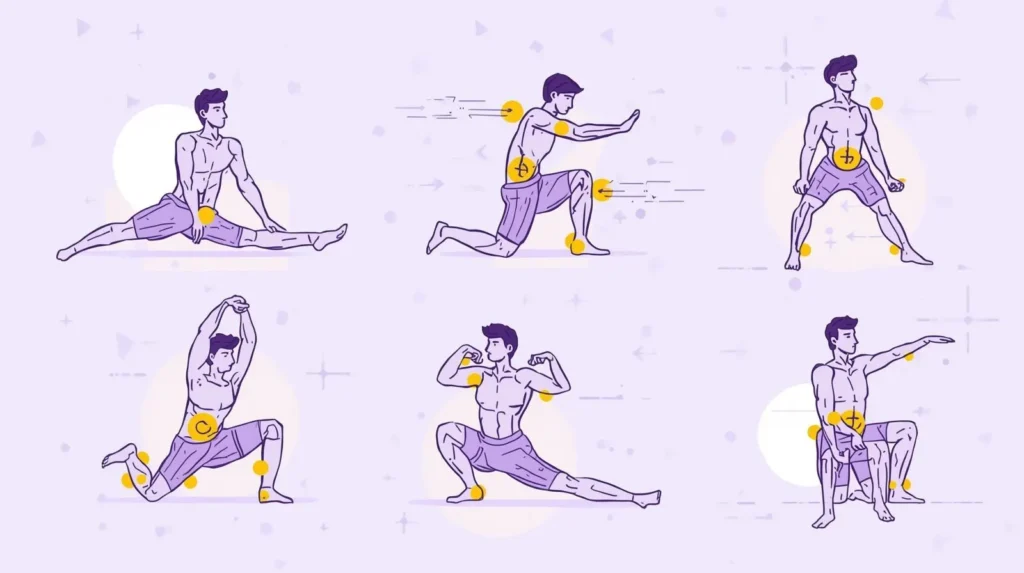
There are many great things to be said about bodyweight exercises.
Top choices:
- Burpees; A total body conditioning exercise that combines squat, plank and jump.
- Plank-to-Pushups: Builds core, shoulders and arms.
- Mountain Climbers: An active workout that builds both endurance and core strength.
Minimal Equipment (Dumbbells or Kettlebells)
A dumbbell or a pair of dumbbells can open you to dozens of powerful exercises.
The Thruster
A thruster combines:
Squat plus Overhead Press
This moves the whole body and increases heart rate quickly.
Renegade Row
Performed in a plank position with dumbbells.
Benefits:
- Core stabilization
- Upper back strength
- Anti-rotation training
Kettlebell Swings
Kettlebell swings build explosive hip power and cardio capacity.
They are popularly included in athletic training and fat loss regimens.
Full Commercial Gym
A gym has more loading options and more variety.
Useful equipment includes:
- Power racks
- Barbells
- Cable machines
- Leg press machines
These tools enable safe advancement for advanced lifters.
Specialized 4-Week Training Blocks
A rotating training approach reduces plateaus, maximizing strengths of each phase simultaneously.
Block 1: Hypertrophy (Muscle Building)
Goal: Increase muscle size.
Key parameters:
- 8 to 12 reps per set
- 60 to 90 seconds rest
- Moderate to heavy weight
Example workout:
- Squat :4×10
- Bench Press : 4×10
- Pull-Ups : 3×8
- Romanian Deadlift : 3×10
- Overhead Press : 3×10
Block 2: Strength and Power
Goal: Maximize strength.
Parameters:
- 3 to 5 reps
- Heavy weights
- 3 minute rest
Example:
- Deadlift to 5×3
- Squat to 5×5
- Bench Press to 5×5
- Pull-Ups to 4×5
Block 3: Losing Fat and Getting Fit
Goal: Lose weight while holding onto muscle.
Structure: Circuit training.
Example circuit:
- Squats to 12 reps
- Push-Ups to 15 reps
- Dumbbell Rows to 12 reps
- Kettlebell Swings to 20 reps
Repeat for 4 to 5 rounds.
And Now for The First Time: Nutrition and Recovery To Fuel The Full Body Athlete
Training alone is not enough.
Recovery and nutrition decide if your body adapts or breaks.
Calculating Your Macros
A simple macro guideline:
- Protein: 1.6 to 2.2 g/kg body weight
- Carbohydrates: 3 to 6 g per kg
- Fats: 0.8 to 1 g per kg
Protein aids in muscle repair and growth.
Studies have shown that spreading protein intake throughout the day results in greater muscle protein synthesis following resistance exercise. [3]
Hydration and Electrolytes
Dehydration can significantly reduce performance.
Aim for:3 to 4 liters of water daily
Additional electrolytes during intense training
Active Recovery
Recovery days can also include light movement.
Good options include:
- Walking
- Mobility exercises
- Stretching
- Yoga
Movement increases blood flow and speeds healing.
Intriguingly, modern studies on health movement indicate that restricted movement patterns in contemporary lifestyles result in stiffening and the darkening of mobility, emphasizing the necessity of varied physical exercises. [4]
Sleep Hygiene
Sleep is the most underrated recovery tool we have.
During sleep:
- Growth hormone increases
- Muscles repair
- The nervous system recovers
Athletes need to strive for 7 to 9 hours a night.
Common Mistakes Averted In Full Body Training
Even effective programs can miss the mark when common mistakes are made.
Mistake 1: Ignoring Weak Points
Even if you follow a full body regime, ensuring weak muscles are not ignored is utmost important.
Example:
- Add accessory work like:
- Hamstring curls
- Lateral raises
- Core training
Mistake 2: Poor Exercise Order
Heavy compound lifts should always be the first on your routine.
- Bad order:Deadlift → Squat → Bench
- Good order:Squat → Bench → Deadlift
Earlier achievements can beat up technique.
Mistake 3: Lack of Variety
Doing the same repetitive movements for months can lead to:
- Plateaus
- Overuse injuries
Rotate variations every 6–8 weeks.
Example:
- Back squat → Front squat
- Barbell row → Dumbbell row
Conclusion
Fitness doesn’t happen overnight it is built over months and years, through consistent habits.Full body training is a powerful system because it is:
- Efficient
- Scientifically supported
- Adaptable to all experience levels
You can make progress in health, strength and fat loss with three well structured workouts a week rather than being locked to spending six days every week training in the gym.
Research shows that over time, these workouts expand into a way of life dedicated to strength, movement (not just exercise) and longevity.
Following the methods above will guarantee that full body training versions are effective, but consistency, progressive overload and healthy eating/recovery will make sure you get results time after time.
Frequently Asked Questions
Full body training sessions usually last 45 mins–75 mins depending on the amount of exercises, rest periods and training intensity.
Yes. Final Thoughts the Best Workout For Beginners Is Full Body TrainingFull body training makes perfect sense for beginners as it develops balanced strength and reinforces proper movement patterns.
A regular workout will have 4 to 6 exercises, mostly compound lifts with some accessories thrown in as needed.
Light cardio is incorporated after workouts but separate cardio days or short sessions usually better promote recovery.
Rest 60 to 90 seconds between sets for muscle growth rest 2 to 3 minutes if focusing on improving strength.
Yes. Training each muscle group 2 to 3 times per week can result in more steady muscle growth.
Yes. It promotes the use of multiple muscle groups, which boosts caloric energy expenditure and metabolic demand.
Most stuff works for 6 to 8 weeks and after that switching up variables or doing some blocks of training will help avoid plateaus.
References
- Journal of Strength & Conditioning Research to Recovery after heavy resistance exercise. (Lippincott Journals)
- Nutrition & Metabolism – Protein intake patterns and muscle protein synthesis. (SpringerLink)
- Nutrition & Metabolism – Whole-body protein turnover and exercise recovery. (SpringerLink)
- Betterhood – Movement health and recovery insights. (LinkedIn)
- Schoenfeld, B. (2016). Effects of Resistance Training Frequency on Muscle Hypertrophy
https://pubmed.ncbi.nlm.nih.gov/27102172/ - Influence of Resistance Training Frequency on Muscular Adaptations
https://pubmed.ncbi.nlm.nih.gov/25932981/ - NSCA – Resistance Training Frequency for Strength and Hypertrophy
https://www.nsca.com/education/videos/resistance-training-frequency-how-often-should-you-train-to-maximize-strength-and-hypertrophy/ - Sports Medicine Review – Resistance Training Frequency and Strength Development
https://link.springer.com/article/10.1007/s40279-021-01460-7 - Schoenfeld – Science and Development of Muscle Hypertrophy
https://www.circuitoultras.org/wp-content/uploads/2021/05/Science-and-development-of-muscle-hypertrophy-by-Brad-Schoenfeld.pdf - Harvard Health – Benefits of Resistance Training
https://www.health.harvard.edu/exercise-and-fitness/get-a-lift-from-resistance-training - Harvard Health – Adding Strength Training to Your Fitness Plan
https://www.health.harvard.edu/staying-healthy/add-strength-training-to-your-fitness-plan