Cervical Traction for Neck Pain: Benefits, Risks & Long-Term Relief
In this article
- What Is Cervical Traction?
- Diseases That Can Be Treated By Cervical Traction
- What Cervical Traction Really Does and What It Can’t Fix ?
- Types of Cervical Traction
- Is Cervical Traction Effective?
- How Cervical Traction Feels ?
- Who Should Refrain From Cervical Traction? (Contraindications)
- Frequency Of Cervical Traction Device Application?
- Cervical Traction compared with other treatments for neck pain
- Lifestyle Related to Cervical Traction Outcome
- Cervical Pulling Force and Sleep Quality
- When to Seek Medical Attention ?
- Final Thoughts: Should You Consider Cervical Traction?
- References
Neck pain has become the nemesis of modern life, quietly resulting in one of the most common musculoskeletal complaints. Those whose lifestyle includes staying at the desks for longer hours, looking at screens constantly with slumped postures, and carry stresses and reduced Physical activity has placed tremendous stress on our cervical spine. What may start as a slight stiffness or an occasional dull ache, can develop into continual discomfort, headaches, arm tingling (or other nerve symptoms), or loss of range of motion that inhibits normal activities.
With more and more people looking for alternatives to pain pills, injections and surgery, cervical traction is an alternative treatment option that targets neck pain at its cause. Cervical traction, usually implemented in physical therapy and rehab centers focuses on relieving the pressure off the neck by lifting up your cervical spine.
But does cervical traction even work? Who should try it, and who should skip it? And where does it fit in for a long-term neck pain management plan?
This in-depth article will inform you of what cervical traction is, how it works, for who and its risks/pros as well as its efficacy and finally how to best combine it with other pain-relief strategies for mutual benefit.
What Is Cervical Traction?
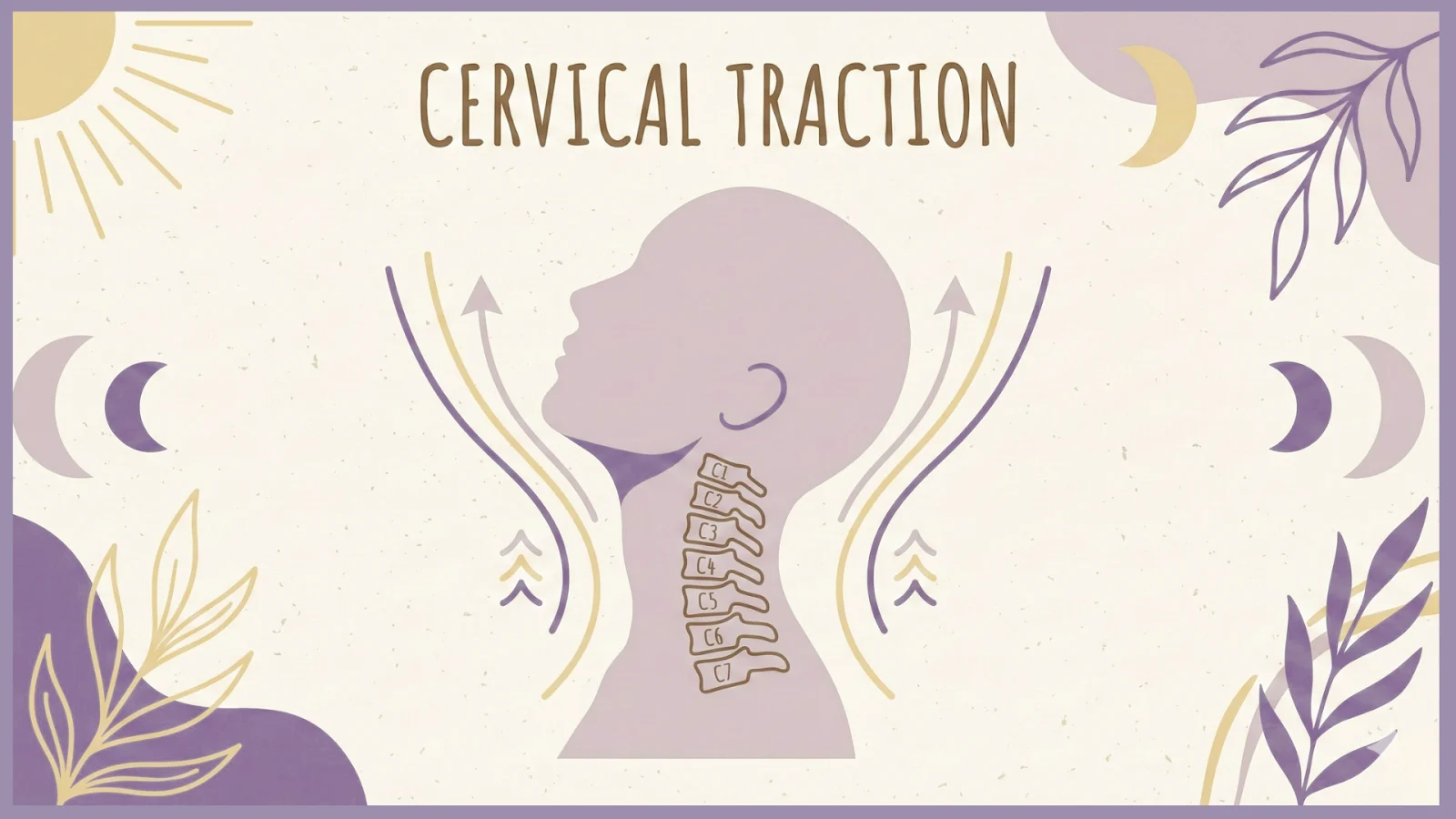
Cervical traction is an approach to therapy that pulls the head, generating space between bones of the neck (cervical spine) C1- C7). This traction also serves to reduce compression off of spinal structures, such as discs, joints and nerve roots.[1]
Cervical traction is not supposed to “fix” the spine once and for all, a foolish expectation anyway, it is to temporarily reduce mechanical stress, “open things up” physiologically, so that irritated tissues can have a chance to calm down.
Cervical traction is often applied as part of a more general physical therapy or rehabilitation program, rather than the only treatment.
Cervical Traction From Within the Neck
To understand cervical traction, it’s helpful to first take a look at what occurs when neck pain arises.
The cervical spine supports the weight of the head (about 4-6 kg) with large mobility. In the space between each vertebra is an intervertebral disc,which serves as a cushion.
Bad posture, overuse or degeneration can cause:
Disc compression or bulging
- Reduced space between vertebrae
- Nerve root irritation
- Muscle guarding and spasms
- Joint stiffness
Cervical traction works by:
- Decreasing disc pressure, which for some may cause discs to retract, reducing the size of a bulge.
- Enlarging neural foramen, so that spinal nerves have more room to exit.[4]
- Over-straining tight muscles and ligaments, particularly in the neck area.
- Enhanced circulation to inflamed areas.
- Reduced muscle spasm and guarding.
This will help relieve pain and stiffness for a short time, making it easier to move and do exercises.
Diseases That Can Be Treated By Cervical Traction
Cervical traction is not indicated for routine neck pain. It is generally indicated in the presence of mechanical or nerve-related neck pain.
Those which are likely to do so include:
- Disc bulge or herniation in the cervical spine
- Cervical spondylosis (age-related degeneration)
- Cervical radiculopathy (nerve pain that travels from the neck down to the shoulder or arm).[2]
- Chronic stiff-neck with loss of range of motion
- Cervical muscle spasms
- Posture-related neck pain with nerve compression
For such conditions traction is effective in the treatment of symptoms, at least in the short term when intensive active therapy is also applied.
What Cervical Traction Really Does and What It Can’t Fix ?
Cervical traction is often recommended as a short-term relief tool for neck pain, especially when stiffness or nerve compression is involved. It works by gently stretching the cervical spine to reduce pressure and create space between vertebrae, which can ease discomfort and improve movement. However, its benefits are temporary and best used as part of a broader, well-rounded treatment approach rather than a standalone fix.
What Cervical Traction Can Do
- Reduce nerve compression temporarily
- Relieve neck stiffness and neck tightness
- Increase short-term pain and mobility
- Allow muscles to relax
- Support rehabilitation progress
What Cervical Traction Can’t Help With
- Permanently “realign” the spine
- Cure degenerative disc disease
- Emphasize posture correction or strengthening
- Serve as a stand-alone long-term answer
This distinction is important. Cervical traction should be seen as a supplement not the solution.[2]
Types of Cervical Traction
Cervical traction can be applied in a number of ways according to the context and requirements of an individual.
1. Manual Cervical Traction
Performed by a trained physiotherapist.
- Therapist gives a gentle tug to the head while watching for a response
- Angle and force changes are made in real time
- Frequently applied in initial treatment episodes
Good for: Sudden pain, new users, diagnosis.
2. Mechanical Cervical Traction
Utilizes a force controlled traction machine.
- Patient is in supine position with head fixation
- Machine provides both intermittent and continuous traction
- Force, duration and angle are accurately adjusted
Ideal for: Organized rehab programs and chronic issues.
3. Over-the-Door Cervical Traction
Designed for home use.
- Rein attached to head and neck
- Pulley System (Using Weights or Resistance) [8]
- For sedentary or recumbent (reclining) usage
Best for: Selected patients under professional care.
4. Pneumatic or Air Traction Cervical Devices
Home traction devices that are air pressure based.
- Allow controlled, adjustable traction
- Usually more comfortable than weighted systems
Best for: Home users with proper guidance.
Is Cervical Traction Effective?
Cervical traction is a popular subject of research and has yielded varied, albeit valuable, results.
A 2017 meta-analysis on cervical traction published in Spine examined a number of studies on the matter and found :-
- Cervical traction may offer temporary relief of pain, especially the kind that affects a nerve.
- There is currently no strong evidence of long-term benefits.
- Traction is only effective when used in conjunction with exercise, posture education, and/or manual therapy.[3]
- Or, put another way: Traction could relieve symptoms and open a “window of relief but ongoing improvement has to come from postural work, strength training and just moving better.[3]
How Cervical Traction Feels ?
During traction, most people report:
- Gentle stretching sensation
- Less stress on the neck
- Slight tugging sensation at the base of the skull
- Muscle relaxation
However, some may experience:
- Headache
- Dizziness
- Nausea
- Increased discomfort [6]
Those symptoms typically indicate that the force or angle needs to be changed, or that traction is not appropriate.
Who Should Refrain From Cervical Traction? (Contraindications)
While cervical traction is safe when monitored appropriately, it isn’t for everyone.
Don’t do cervical traction if you have :
- Cervical spondylitis or rheumatoid arthritis involving the cervical spine
- Recent neck fracture or injury
- Spinal instability or hypermobility
- Severe osteoporosis
- Cancers or infections of the neck.
- Disease of the vertebral or carotid arteries
- Surgery hardware in the back of neck (unless approved in writing by you surgeon)
*Always consult a health care professional before using traction and certainly if you are planning to use it at home.[5]
Frequency Of Cervical Traction Device Application?
Frequency will vary depending upon the condition and the patient’s individual response.
General guidelines:
- 2–3 times a week in clinical practice
- Short sessions (10–20 minutes)
- Less force initially titrated to gradually.
The daily use of traction is not advised unless it is a prescription, as excessive use can exacerbate symptoms.
Cervical Traction compared with other treatments for neck pain
| Treatment | Primary Role in Neck Pain Management |
| Cervical traction | Temporarily relieves spinal compression and reduces nerve pressure |
| Physiotherapy exercises | Builds muscular strength, endurance, and cervical stability |
| Manual therapy | Increases joint mobility and improves range of motion |
| Heat / cold therapy | Reduces muscle tension, inflammation, and pain |
| Ergonomic correction | Helps prevent recurrence by improving posture and alignment |
| Topical pain relief | Provides localized pain and discomfort reduction |
Best practice: Long-term neck pain management typically involves a combination of several of these approaches rather than relying on one alone.[2]
Topical Analgesia in the Management of Neck Pain
Topical pain-relief creams can complement cervical traction by:
- Improving local blood flow
- Reducing muscle tension
- Supporting post-traction comfort
- Allowing easier movement
The preparation that includes components such as Arnica, Capsaicin MSM and vitamin B-complex is frequently used for local treatment of muscle/joint pains, without any systemic side effects.
Lifestyle Related to Cervical Traction Outcome
Traction will help best when daily activities / habits are supporting spinal health.
Key factors include:
- Ergonomic desk setup
- Screen at eye level
- Regular posture breaks
- Supportive sleeping positions
- Stress management
Neglecting them may compromise the development of traction considerably.
Cervical Pulling Force and Sleep Quality
Morning is when many wake up to the worst pain in their neck. The neck is compressed for long hours in poor sleep posture.
Night support for cervical, which holds the neck in a neutral posture while in the supine position during sleep can facilitate a reduction of overnight strain and improved traction results.
When to Seek Medical Attention ?
Stop traction support and get medical help if you have:[7]
- Worsening pain
- Arm weakness or numbness
- Severe dizziness
- Loss of balance
- Visual disturbances
These symptoms require immediate evaluation.[5]
Final Thoughts: Should You Consider Cervical Traction?
Cervical traction may be an effective option for those looking to avoid surgery and pursue non-invasive methods of relieving their neck pain, particularly if nerves or discs are involved. Yet it is not a miracle weapon.
The most effective pulling is done when:
* Properly prescribed
* Professionally guided
* Combined with exercise, posture correction, and lifestyle changes
If used wisely, they can help to reduce pain, improve mobility and buttress recovery long term.
Explore More Health & Wellness Solutions:
Want to stay informed about wellness and everyday health issues? Here are some insightful reads to guide you. Explore the links below for practical tips and solutions:
- Struggling to Breathe? Here’s a Simple Postural Drainage Routine to do at Home
- Acupressure Points in the Foot: Benefits, Chart & Pressure Techniques
- How Can Knee Cap Support Help Prevent Injury and Reduce Pain While Running
Frequently Asked Questions
Where it’s safe to do so] Only if a doctor advises.
It can lessen symptoms, but doesn’t slow degeneration.
Some experience relief after sessions; it takes weeks for others.
No. It is most effective when used in conjunction with active rehabilitation.”
It could be good for cervicogenic headaches, those triggered by neck tension.
References
- Cleveland Clinic. (2022, May 19). Cervical traction: What it is, types & benefits. https://my.clevelandclinic.org/health/treatments/23093-cervical-traction
- Blanpied, P. R., Gross, A. R., Elliott, J. M., Devaney, L. L., Clewley, D., Walton, D. M., Sparks, C., & Robertson, E. K. (2017). Neck pain: Revision 2017: Clinical practice guidelines linked to the International Classification of Functioning, Disability, and Health from the Orthopaedic Section of the American Physical Therapy Association. Journal of Orthopaedic & Sports Physical Therapy, 47(7), A1–A83. https://www.jospt.org/doi/10.2519/jospt.2017.0302
- Romeo, A., Vanti, C., Boldrini, V., Ruggeri, M., Guccione, A. A., & Pillastrini, P. (2018). Cervical radiculopathy: Effectiveness of adding traction to physical therapy, A systematic review and meta-analysis of randomized controlled trials. Physical Therapy, 98(4), 231–242. https://pubmed.ncbi.nlm.nih.gov/29315428/
- Yoo, W. G., & Kim, M. H. (2007). Quantitative changes in the cervical neural foramen resulting from intermittent traction. Spine. https://pubmed.ncbi.nlm.nih.gov/17697801/
- Abi, K. R., & colleagues. (2025). Cervical traction. In StatPearls. StatPearls Publishing. https://www.ncbi.nlm.nih.gov/books/NBK470412/
- Cleveland Clinic. (2022, May 19). Cervical traction: Risks / benefits. https://my.clevelandclinic.org/health/treatments/23093-cervical-traction
- Mayo Clinic. (n.d.). Neck pain: When to see a doctor. https://www.mayoclinic.org/symptoms/neck-pain/basics/when-to-see-doctor/sym-20050882
- Bagheripour, B., Ghasemi, G. A., Azimi, P., & other authors. (2016). The efficacy of a home-mechanical traction unit for patients with mild to moderate cervical osteoarthrosis: A randomized controlled trial. Journal of Clinical and Diagnostic Research. https://pmc.ncbi.nlm.nih.gov/articles/PMC4972072/