Why Your Body Feels Older Than Your Age
In this article
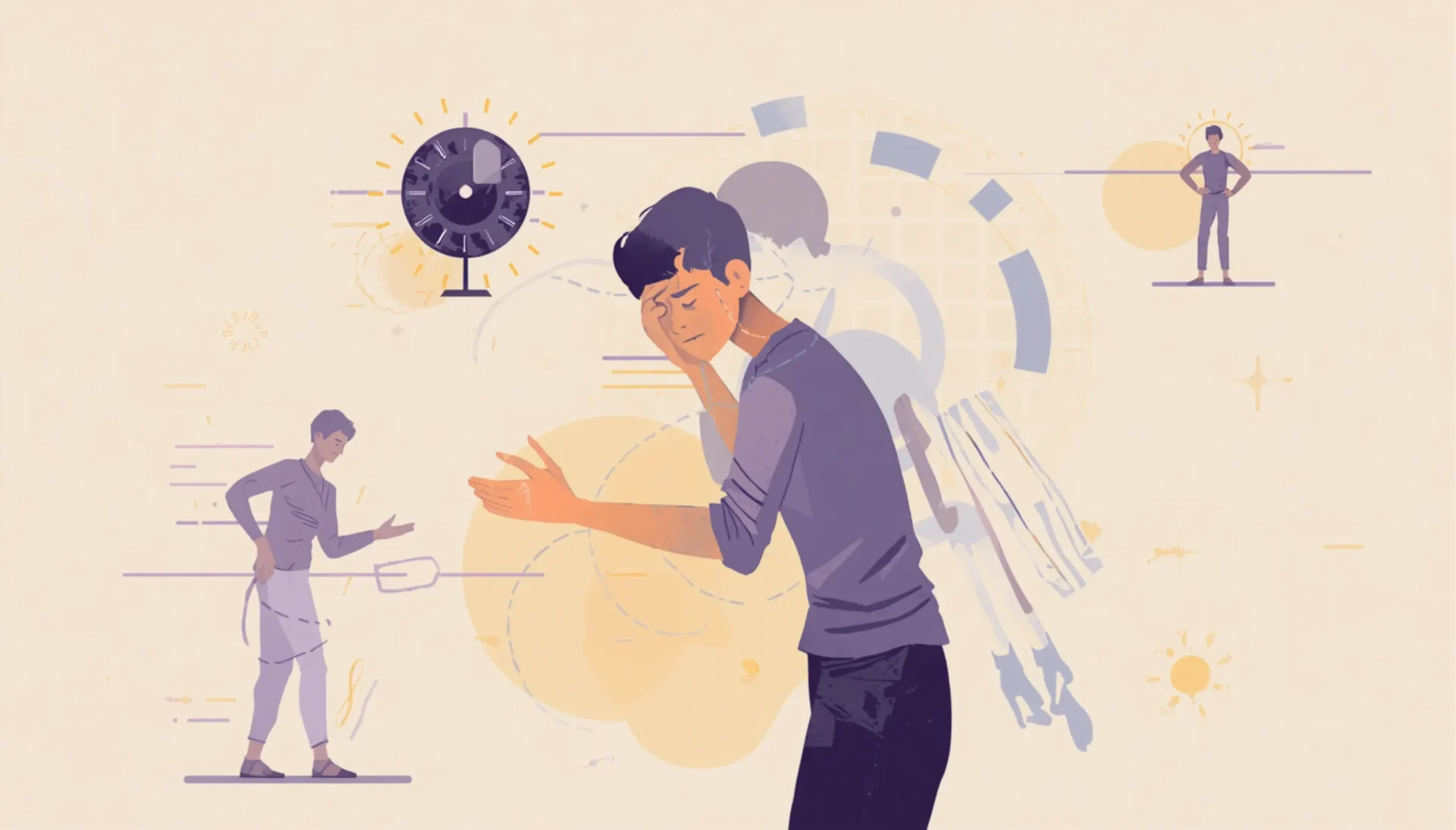
Many people experience a disconnect between their actual age and how their body feels.
You may be in your 20s or 30s but wake up with stiffness, fatigue, or low energy that feels disproportionate to your age. Movements feel slower, recovery takes longer, and everyday tasks require more effort than expected.
This is often described as “feeling older” than your age.
However, this experience is not random. It reflects how the body is responding to accumulated stress, reduced movement variability, and insufficient recovery over time.
Chronological Age vs Biological Age
Chronological age refers to the number of years you have lived. Biological age reflects how well your body functions.
Two individuals of the same age can have very different biological profiles depending on:
- Movement habits
- Sleep quality
- Stress levels
- Nutrition
- Recovery patterns
When biological age begins to outpace chronological age, the body starts to feel older. [2]
The Role of Movement in Aging
Regular movement maintains joint mobility, muscle function, and circulation. It also supports coordination and nervous system responsiveness. [1]
Modern lifestyles often reduce movement diversity:
- Prolonged sitting
- Limited physical variation
- Repetitive daily routines
Over time, this leads to stiffness, reduced flexibility, and decreased movement efficiency. [3]
The body adapts to what it does frequently. When movement becomes limited, capacity gradually declines.
Accumulated Physical Stress
Daily life places continuous demands on the body. Long hours of sitting, screen use, and poor posture create low-grade physical stress. [1]
This stress may not feel significant at the moment, but it accumulates.
Common outcomes include:
- Muscle tightness
- Joint discomfort
- Reduced range of motion
- Fatigue during simple activities
The body begins to operate with less ease, which contributes to the sensation of aging.
The Impact of Poor Recovery
Recovery allows the body to repair, restore, and adapt. [4]
When recovery is insufficient:
- Muscles remain tens
- Energy levels stay low
- Sleep feels less restorative
- Stress persists in the system
Even with adequate rest, the nervous system may remain in a heightened state, limiting true recovery.
This creates a cycle where fatigue accumulates faster than the body can recover.
Stress and the Nervous System
Chronic stress affects more than mental well-being. It directly influences physical function. [5]
When the nervous system remains in a constant state of alertness:
- Muscle tension increases
- Breathing becomes shallow
- Movement becomes less efficient
- Recovery slows down
Over time, this contributes to stiffness, fatigue, and reduced physical capacity.
The body feels older not because of age, but because it has not returned to a fully recovered state.
Reduced Adaptability
A key factor in how young or old the body feels is adaptability.
An adaptable body:
- Adjusts easily to movement demands
- Recovers quickly from stress
- Maintains coordination and balance
A less adaptable body:
- Feels stiff and restricted
- Takes longer to recover
- Struggles with new or varied movements
Modern routines often reduce exposure to varied movement and environments, which limits adaptability over time. [3]
How to Improve How Your Body Feels
Improving how your body feels does not require extreme changes. Small, consistent adjustments can make a significant difference.
Focus on:
- Increasing daily movement (walking, stretching, changing posture)
- Improving movement variety (different directions, speeds, activities)
- Prioritizing sleep quality
- Managing stress through breathing and breaks
- Allowing time for proper recovery
These changes help restore balance in the body and improve overall function.
The Real Takeaway
Feeling older than your age is not always a sign of aging. It is often a reflection of how the body has been used, stressed, and supported over time.
When movement is limited, stress is constant, and recovery is insufficient, the body adapts by becoming less efficient and more fatigued.
The good news is that this process is reversible.
By improving movement, recovery, and nervous system regulation, the body can regain energy, flexibility, and resilience.
Because age is not just a number. It is also how well your body is able to move, recover, and adapt.
Co- authored by:Shayamal Vallabhjee
Chief Science Officer: betterhood
Shayamal is a Human Performance Designer who works at the intersection of psychology, physiology, and human systems design, for the last 25 years he is helping high-performing leaders, teams, and athletes thrive in environments of stress, complexity, and change. His work spans across elite sports, corporate leadership, and chronic health and is grounded in the belief that true performance isn’t about pushing harder, but designing better.
References
- World Health Organization. (2020). Physical activity. https://www.who.int/news-room/fact-sheets/detail/physical-activity
- Harvard Health Publishing. (2023). Biological age vs chronological age: What’s the difference? https://www.health.harvard.edu
- Centers for Disease Control and Prevention. (2023). Benefits of physical activity. https://www.cdc.gov/physicalactivity/basics/pa-health/index.htm
- National Institutes of Health. (2022). Sleep deprivation and deficiency. https://www.nhlbi.nih.gov
- American Psychological Association. (2023). Stress effects on the body. https://www.apa.org/topics/stress/body


